



Fall has a way of changing how we use the car.
One weekend might mean nothing more than groceries and errands. The next could be a highway drive to see family, a day outside with the kids, or a last-minute trip somewhere the trees are already changing color.
You don't need a trunk full of equipment for every possibility.
But having a few tools you actually know how to use can make those ordinary trips feel a lot less uncertain.
With Columbus Day weekend ahead, early October is a good time to open the trunk, take a quick inventory and ask a simple question:
If something small goes wrong on the next drive, am I prepared to deal with it?
Start With the Tires: Check Before You Add Air
Tire maintenance is one of those jobs that tends to get ignored because nothing seems wrong—until something is.
NHTSA recommends checking the pressure of every tire, including the spare when applicable, at least once a month while the tires are cold. "Cold" means the vehicle hasn't been driven for at least three hours. The correct PSI should come from the Tire and Loading Information label on the driver's doorjamb or the owner's manual—not from the maximum pressure molded into the tire sidewall. (Source)

That's a good habit to build before fall road trips:
Check first, adjust second.
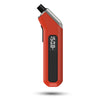
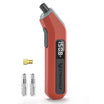
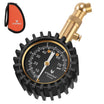
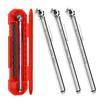
A pressure gauge such as the ETENWOLF T300 Plus Digital Tire Pressure Gauge makes that first step easy. It measures up to 200 PSI, includes an LED for low-light checks and is designed to operate from -4°F to 130°F. Each ETENWOLF digital tire pressure gauge is calibrated manually to ANSI B40.7 Grade 2A (±1 PSI)

And don't assume the TPMS light replaces the gauge. NHTSA points out that TPMS generally warns after a tire is already significantly underinflated, so monthly manual checks still matter. (Source)
Fall travel can make those readings more interesting, especially if you're headed somewhere colder or higher.
We recently explained why altitude, outside temperature and driving heat can push tire-pressure readings in different directions in Does Altitude Affect Tire Pressure? What Drivers Should Know. Read the high-altitude tire pressure guide
Once you know a tire actually needs air, the next question is what kind of inflator makes sense for your vehicle.
Choose the Tire Inflator That Fits the Way You Drive
The best tire inflator isn't necessarily the one with the biggest battery or the most impressive specification sheet.
It is the one you'll realistically use.
A person commuting in a sedan five days a week doesn't have the same needs as someone taking an F-150 camping every other weekend. And someone maintaining RV or off-road tires shouldn't choose equipment based on what works well for a compact car.
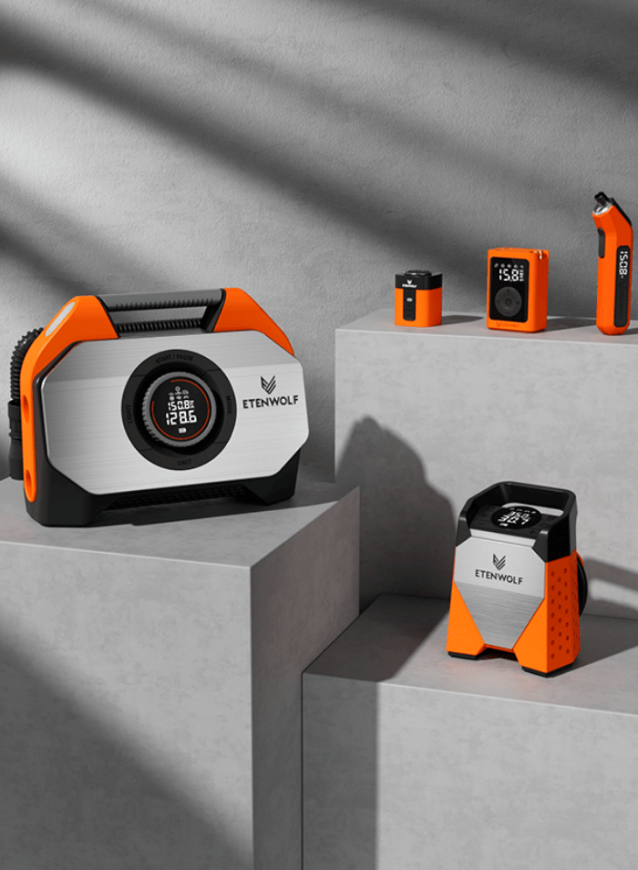
Here's the simpler way to look at the ETENWOLF lineup:
| How You Usually Drive | Best Fit | Why |
|---|---|---|
| Daily commuting, errands, sedan or crossover | S1 | Compact and easy for everyday pressure top-ups |
| Weekend SUV or pickup trips | Vortex S6 SE | Heavy-duty performance without stepping all the way up to S7 |
| Frequent trips and larger tires | Vortex S6 | More battery capacity and continuous-duty performance |
| Trucks, RVs, off-road and heavy-duty tires | Vortex S7 | Highest airflow and battery capacity in the lineup |
For Everyday Driving: ETENWOLF S1

Not every car needs a heavy-duty compressor.
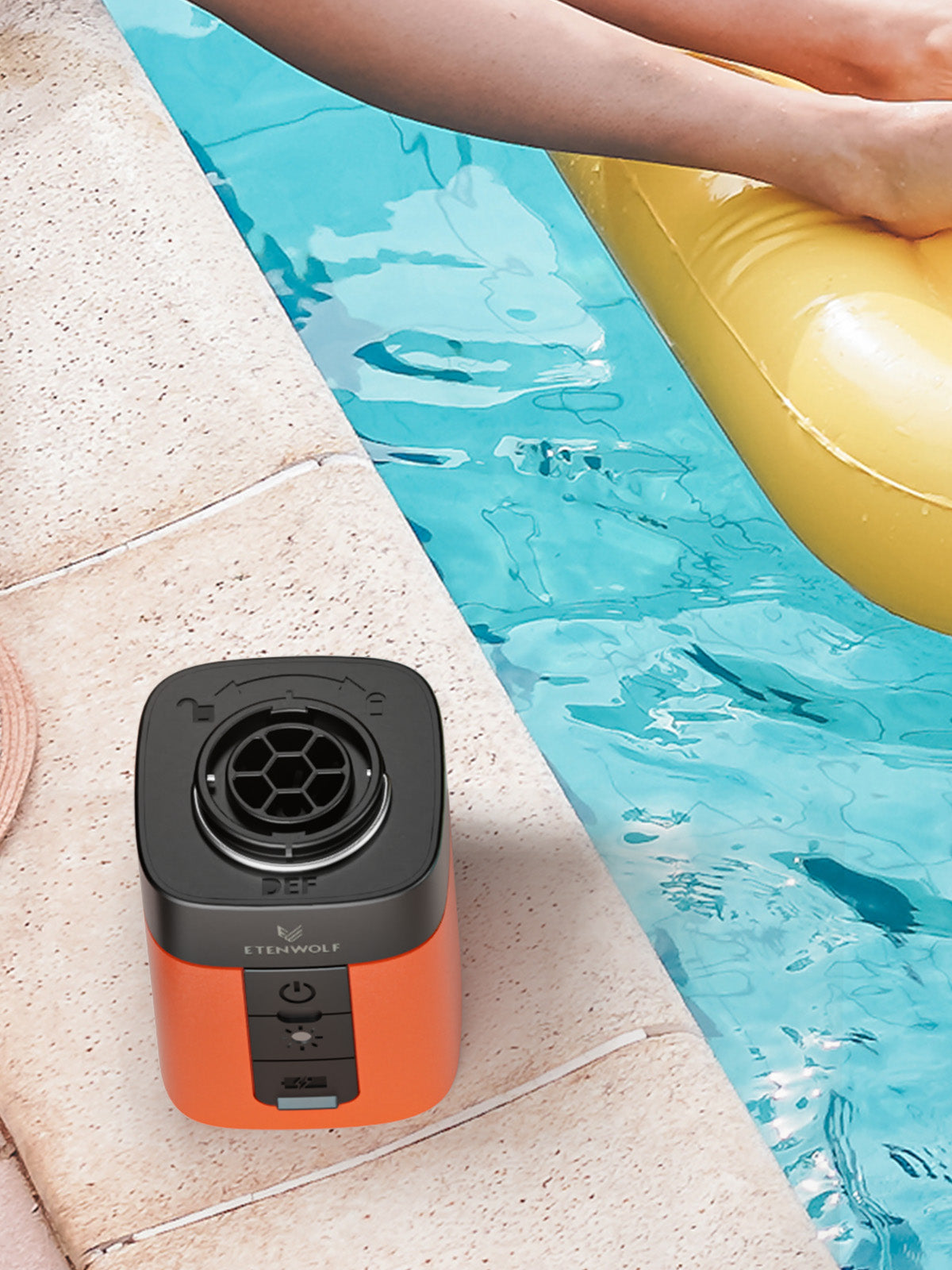
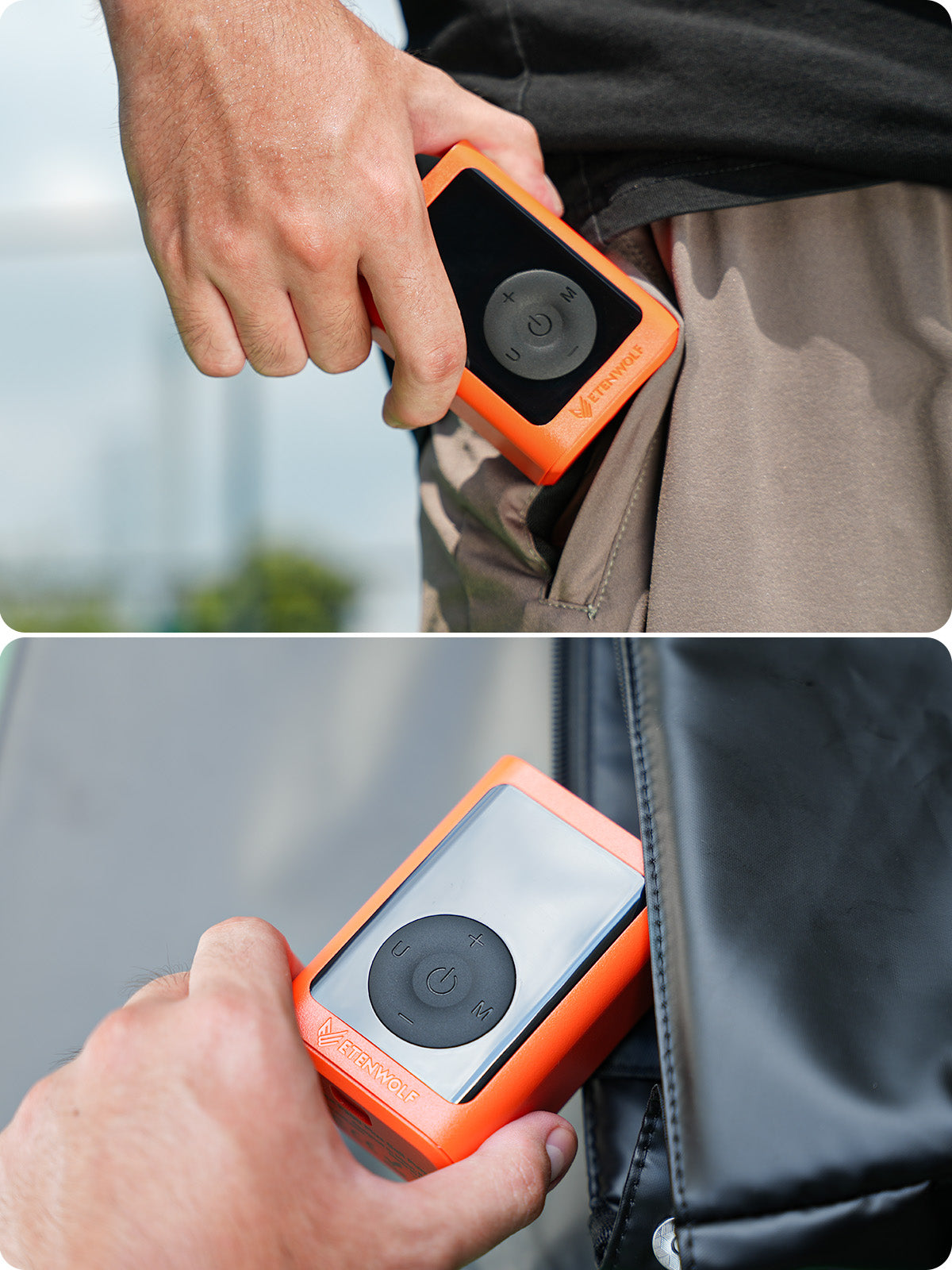
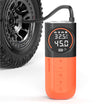
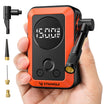
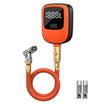
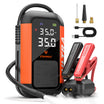
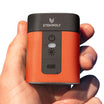
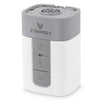
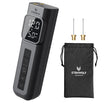
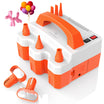
If your routine is mostly commuting, school runs, groceries and weekend drives, the ETENWOLF S1 Portable Tire Inflator keeps things simple.
It delivers 20 L/min airflow, supports up to 160 PSI and carries a 5,200mAh battery. It can bring a 195/65R15 tire from 30 to 35 PSI in about 60 seconds. Automatic shutoff stops inflation once the selected pressure is reached.
The biggest advantage isn't that S1 wins a specification contest.
It's that it's small enough to leave in the car without thinking about it.
For everyday drivers, that matters.
For Weekends Beyond the City: Vortex S6 SE

Your weekday commute might be ten miles.
Your weekend might involve a loaded SUV, a pickup, three hours of interstate driving and a campsite that isn't anywhere near an air station.
That's where the Vortex S6 SE becomes the more practical step up.
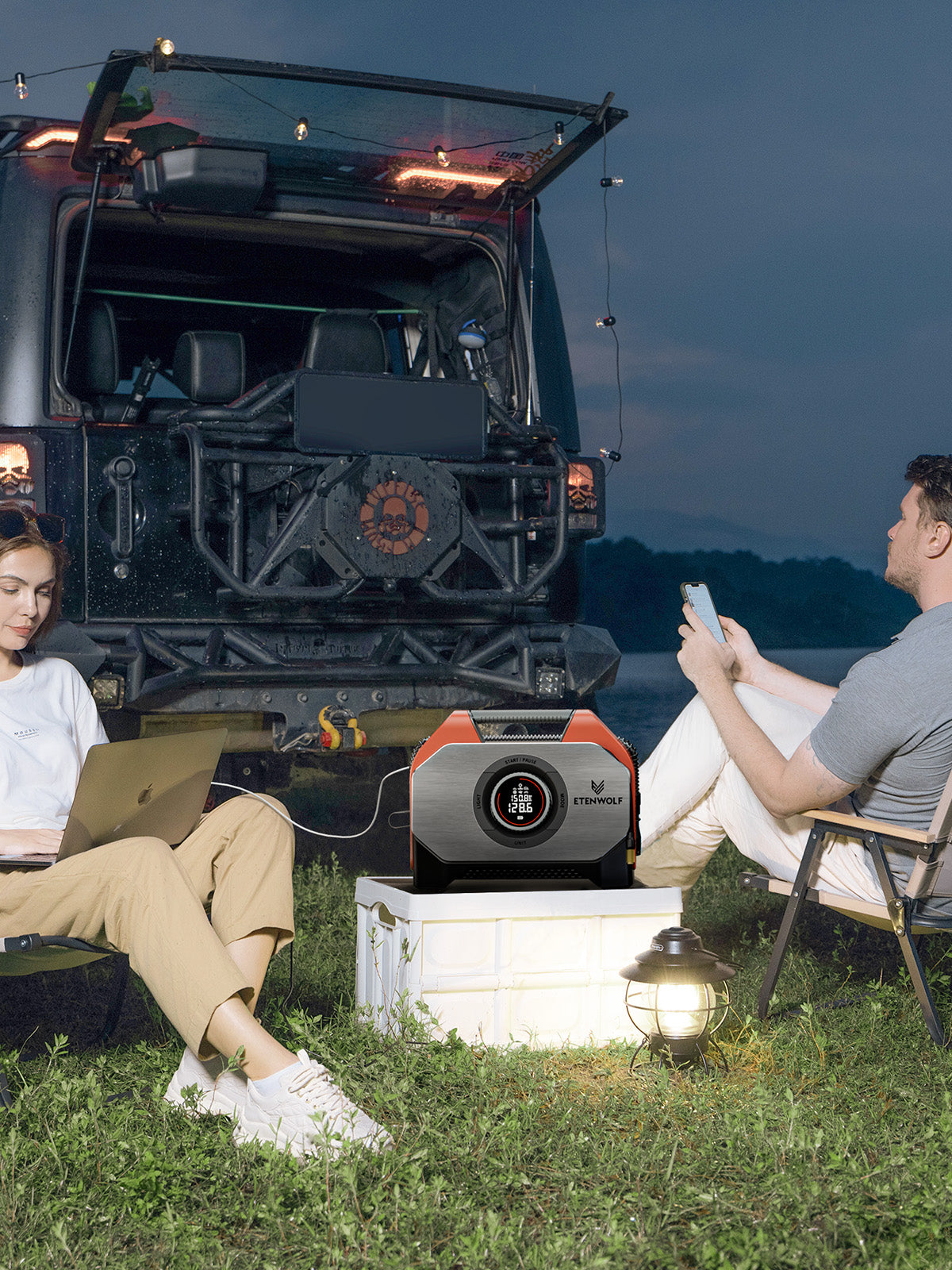
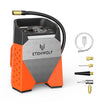
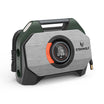
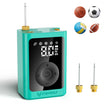
It uses a dual-cylinder design and a 15,600mAh battery to inflate a 31-inch tire in about one minute under its test conditions. The product is specifically positioned for pickups, SUVs applications.
S6 SE makes the most sense for the person who doesn't need ETENWOLF's largest inflator, but regularly asks more of their tires than a commuter car does.
For Frequent Road Trips: Vortex S6

The Vortex S6 moves further toward heavy-duty use.
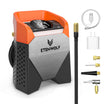
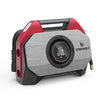
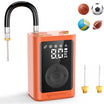
Its 19,200mAh battery provides more reserve, while 42 L/min airflow at 0 PSI helps move the larger volume of air required by pickup and SUV tires. The S6 with active cooling rates it for a 100% duty cycle, meaning it's designed for continuous inflation rather than repeated cooldown breaks.
That makes it a stronger match for drivers who spend more time on the highway, regularly maintain larger tires, or simply want more battery endurance available when they're away from home.
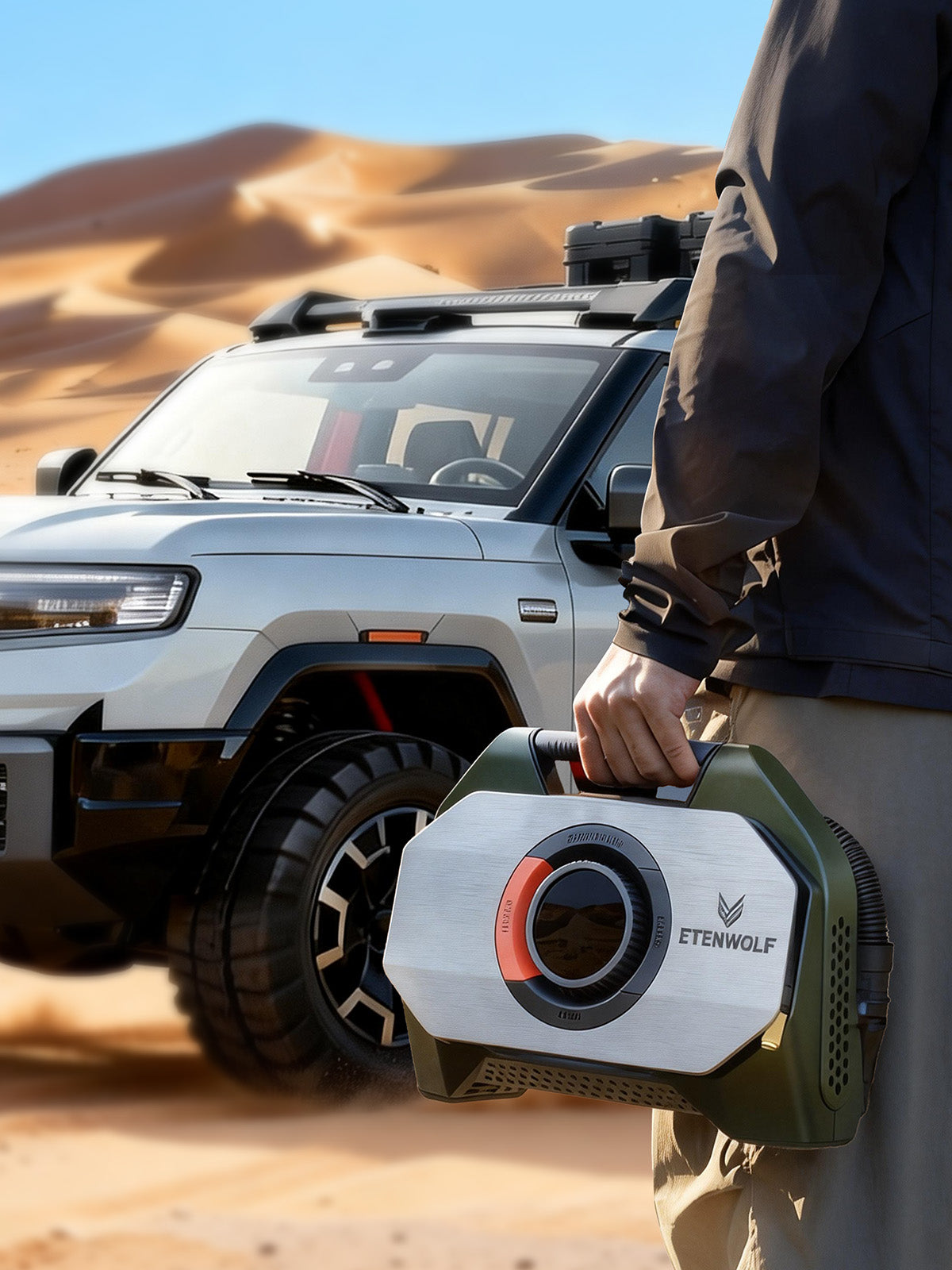
For Heavy-Duty Tires: Vortex S7

Then there's a different kind of use case.
Pickup.
Large SUV.
RV.
Off-road vehicle.
Large-volume tires don't just need pressure. They need a lot of airflow.
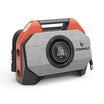
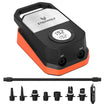
The ETENWOLF Vortex S7 Heavy Duty Tire Inflator uses dual 260W motors, produces 52 L/min (1.85 CFM at 0 PSI) and carries a 38,400mAh battery—twice the battery capacity of the S6. The S7 offers a 100% duty cycle and ±1 PSI sensor accuracy.
That combination is why we would point truck, RV and serious off-road drivers toward S7 rather than simply recommending the same small inflator to everybody.
Maximum PSI gets plenty of attention when people shop for tire inflators, but for large tires, airflow, heat management and duty cycle are often the specifications that determine whether the job takes a reasonable amount of time.
We cover that in more depth in Why Your Tire Inflator Struggles With Truck and Trailer Tires. See why heavy-duty tires need more than a big PSI number
The point isn't to buy more inflator than you need.
It's to avoid buying less than your tires require.
Build a Small Road Kit, Not a Mobile Garage
It's easy to keep adding things to an emergency-kit checklist until half the trunk disappears.
Most drivers don't need that.
A useful basic setup can be built around a few jobs:
Check the pressure.
Add air.
Deal with an appropriate puncture.
Start the vehicle if the battery can't.
That covers a surprisingly large portion of the ordinary problems people encounter away from home.
Tire Pressure Gauge — Know Before You Inflate

A gauge answers the first question:
Does the tire actually need air?
That sounds obvious, but it matters. Tire pressure changes naturally with temperature and driving conditions, and repeatedly adding air because a tire "looks low" isn't a good maintenance strategy.
Measure it.
Compare it with the vehicle specification.
Then act.
Tire Inflator — Correct the Pressure

Once you know the tire is low, an inflator handles the second job.
Which inflator belongs in the car depends on the vehicle, as we've covered above.
S1 suits an everyday commuter.
S6 SE and S6 make more sense as vehicle size and travel demands increase.
S7 is built around the airflow, battery capacity and thermal demands of heavy-duty tires.
You don't need all four.
You need the right one.
R1 Tire Repair Kit — For the Problem Air Alone Can't Solve

An inflator adds air.
It doesn't remove a nail or close a puncture.
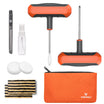
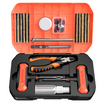
The ETENWOLF R1 Flat Tire Repair Kit gives drivers another option for certain punctures in tubeless tire tread areas. The 42-piece kit includes stainless-steel T-handle tools, 0.14-inch and 0.18-inch plugs, pliers, a pressure gauge, valve cores, valve caps and other roadside repair pieces in a compact case.
That distinction matters because "flat tire" describes the symptom, not the damage.
Sometimes a tire simply lost pressure.
Sometimes a small tread puncture is involved.
Sometimes the sidewall is torn or the tire has suffered structural damage.
Those are not the same repair.
We've covered that distinction in Can a Tire Inflator Fix a Flat Tire? Learn what a tire inflator can—and cannot—fix
And if the damage means the wheel actually needs to come off, knowing how to safely use the factory jack is still valuable. Read our guide to using a car jack and changing a flat tire safely
J1 Jump Starter — For the Morning the Car Doesn't Start

Tire-pressure problems often give you clues.
A weakening car battery has a habit of making itself known when you're already running late.
That's why a portable jump starter is a useful complement to tire equipment rather than another version of the same tool.
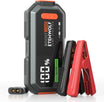
The ETENWOLF J1 Portable Car Battery Jump Starter delivers 2,000A peak power, supports engines up to 8.0L gasoline and 6.5L diesel, and carries a 16,000mAh battery. It provides up to 35 jump starts per charge under its testing conditions. It also includes eight built-in safety protections, including reverse-polarity and short-circuit protection.
Most importantly, it doesn't require another vehicle to get you started.
If you're deciding whether a portable unit makes sense alongside—or instead of—traditional jumper cables, we've compared both approaches in Which Is Better: Jump Starter or Jumper Cables? Compare portable jump starters and jumper cables
Know What Your Tools Can't Do
Good preparation isn't just knowing which tool to reach for.
It's knowing when not to use it.
A tire inflator cannot repair a torn sidewall, a severely damaged tire or a blowout.
A plug kit isn't a universal permanent repair for every puncture. Serious damage still needs professional inspection and, when appropriate, tire replacement.
A jump starter can provide the temporary power needed to crank a vehicle whose battery doesn't have enough charge. It cannot repair a failed battery, alternator, starter motor or another electrical problem.
And a pressure gauge tells you the PSI. It doesn't decide the correct PSI for your vehicle—the doorjamb placard and owner's manual do.
NHTSA also reminds drivers that visible damage, recurring pressure loss, unusual noise or vibration are reasons to have a tire professionally inspected rather than repeatedly adding air and continuing to drive.
There's a simple way to think about it:
Prepared doesn't mean never needing professional help. It means having more options before you do.
That is the kind of roadside kit worth carrying.
ETENWOLF Columbus Day Sale: October 3–13

If you've been planning to add an inflator to the car or move up to a model that better suits your truck, SUV or travel routine, the ETENWOLF Columbus Day Sale runs from October 3 through October 13, 2026.
Use the corresponding code at checkout:
| Product | Columbus Day Discount | Code |
|---|---|---|
| Vortex S7 | 10% OFF | COLS7 |
| Vortex S6 | 30% OFF | COLS6 |
| Vortex S6 SE | 25% OFF | COLS6SE |
| S1 | 15% OFF | COLS1 |
One thing is worth saying here:
The biggest discount isn't automatically the best deal for you.
If you drive a sedan to work every day, S1 may make far more sense than buying S7 just because S7 is more powerful.
If you have a truck or RV, the reverse may be true. Saving a little money on a small inflator doesn't help much if the tool spends an eternity trying to fill your tires.
Choose around the vehicle and the way you actually travel.
That's the better deal.
Ready for the Next Mile
Some trips are planned.
Some begin because somebody texts on Friday afternoon and asks, "Want to go?"
Either way, a little preparation makes it easier to say yes.
Check the tires.
Make sure the spare and roadside tools are actually there.
Keep a way to restore pressure.
Have a plan for an appropriate puncture.
And don't wait until the battery is dead to discover the jumper cables have been sitting in somebody else's garage for three years.
You don't need everything.
You need the things that make sense for your car, your trips and the places you actually go.
This Columbus Day, take five minutes to look through the vehicle before the next drive starts.
Check what you have. Add what you'll actually use. Then get on with the trip.
Check. Prepare. Go.
FAQs
Which ETENWOLF tire inflator is best for everyday driving?
For most everyday cars, sedans and crossovers, the ETENWOLF S1 is the easiest fit. It has a 5,200mAh battery, 20 L/min airflow and a compact design that makes it simple to keep in the vehicle for routine pressure top-ups.
Which ETENWOLF tire inflator is best for trucks and larger tires?
For pickups, large SUVs, RVs, off-road vehicles and other large-volume tires, the Vortex S7 is ETENWOLF's strongest heavy-duty option. It combines 52 L/min airflow, dual 260W motors, a 38,400mAh battery and a 100% duty-cycle design.
What's the difference between the S6 SE, S6 and S7?
The S6 SE is the lighter heavy-duty option with a 15,600mAh battery. The S6 steps up to a 19,200mAh battery, 42 L/min airflow and continuous-duty capability. The S7 moves to 52 L/min airflow and a 38,400mAh battery for the most demanding heavy-duty applications.
What should I keep in a basic roadside emergency kit?
A practical setup can include a reliable tire-pressure gauge, an inflator suited to your vehicle, a tire repair kit for appropriate tubeless-tire tread punctures, a flashlight, basic safety equipment and a portable jump starter. Drivers whose vehicle carries a spare should also know where its jack and lug wrench are stored.
The goal isn't to carry every possible tool. It's to cover realistic problems with equipment you know how to use.
Can a tire inflator repair a puncture?
No. A tire inflator only restores air pressure.
A suitable tire repair kit may help with some repairable tread punctures in tubeless tires, but it does not make major sidewall damage, blowouts or structural tire damage safe to drive on.
Do I still need a pressure gauge if my car has TPMS?
Yes. NHTSA states that TPMS is not a replacement for regular tire-pressure checks because the system generally warns only when a tire has already become significantly underinflated. NHTSA recommends checking pressure manually at least once a month when the tires are cold.
Why would I carry a jump starter if I already have jumper cables?
Jumper cables require another working vehicle. A portable jump starter carries its own stored energy, allowing the driver to attempt a jump start without waiting for another car. Both approaches have uses, but a portable unit is particularly useful for drivers who travel alone or into areas where help may not be immediately available.
When does the ETENWOLF Columbus Day Sale end?
The ETENWOLF Columbus Day Sale runs October 3 through October 13, 2026. The S7, S6, S6 SE and S1 each have their own discount code, so make sure the correct code is entered at checkout.



Leave a comment
All comments are moderated before being published.
This site is protected by hCaptcha and the hCaptcha Privacy Policy and Terms of Service apply.