
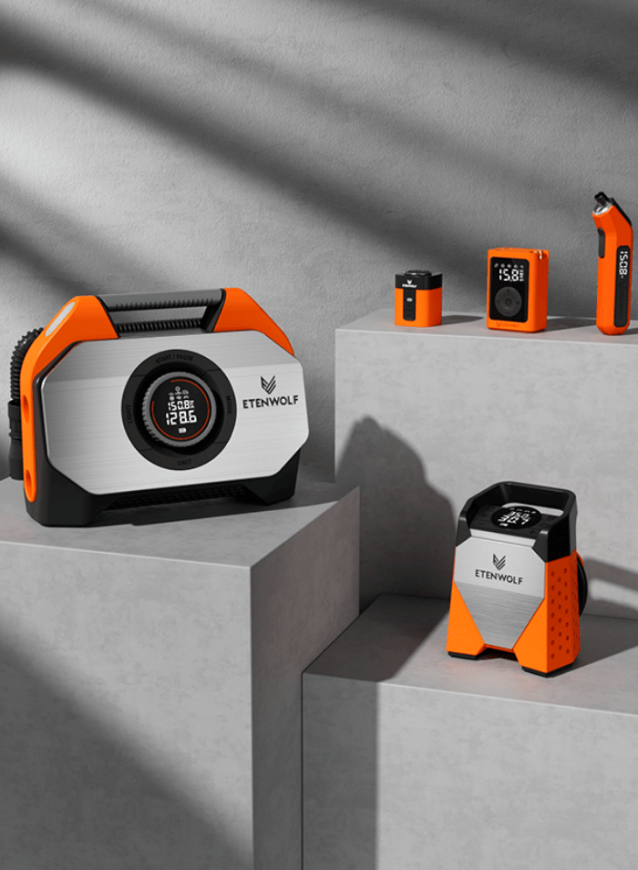
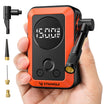
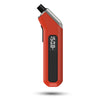
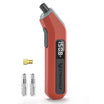
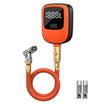
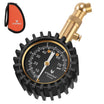







You connect your tire inflator, set the target pressure to 35 PSI, and wait.
A few minutes later, the machine stops automatically. The display shows exactly what you wanted.
Everything looks perfect.
Then you remove the hose, check the tire again, and notice something confusing:
The pressure is no longer 35 PSI.
Maybe it shows 33 PSI. Maybe after driving for a while, the number changes again.
Many drivers immediately assume something is wrong:
· Is my tire inflator inaccurate?
· Is my tire leaking?
· Is the digital gauge broken?
· Why did the pressure drop after inflation?
The answer is usually more complicated than a simple “good pump” or “bad pump.”
Tire inflation is not just about forcing air into a tire. It is a process involving air temperature, pressure changes, airflow speed, and stabilization time.
Understanding what happens inside the tire can help drivers use a tire inflator correctly and avoid unnecessary concerns.
Why Does Tire Pressure Change During Inflation?
A common misunderstanding is that tire pressure is a fixed number that appears instantly when air enters the tire.
In reality, pressure inside a tire is constantly affected by conditions around it.
During inflation, three things happen at the same time:
· Air is compressed and pushed into the tire.
· The temperature of the air increases.
· The pressure inside the tire gradually stabilizes.
This means the number displayed by your tire inflator during inflation is a dynamic measurement, not always the final resting pressure.

Compressed Air Creates Heat
When a tire inflator works, it uses a motor to compress outside air and force it through the hose into the tire.
Compression requires energy.
That energy increases molecular movement, which raises the temperature of the compressed air.
The relationship between temperature and pressure is a basic principle of gas behavior. The National Institute of Standards and Technology (NIST) explains the relationship between thermophysical properties of gases, including how temperature changes influence pressure behavior in gases. (Source)
This is why a tire may temporarily show a slightly higher pressure immediately after inflation.
The air inside the tire is warmer than the surrounding environment.
Why Does Tire Pressure Drop After Inflation?
There are several reasons why pressure may change after you finish inflating.
1. The Air Inside the Tire Has Not Stabilized Yet
During inflation:
· compressed air enters quickly;
· internal temperature increases;
· pressure readings fluctuate.
After the tire sits for a while, the temperature begins to stabilize.
The final pressure reading may be slightly different from the number shown during active inflation.
This does not automatically mean the tire is losing air.
2. The Tire Inflator Measures Pressure During an Active Process
A tire inflator is not simply measuring a motionless tire.
During inflation, the system includes:
· compressor output pressure;
· hose pressure;
· valve pressure;
· tire pressure.
The machine is measuring a changing environment.
This is why professional technicians usually check tire pressure when tires are cold and have been resting.
NHTSA recommends maintaining proper tire pressure and checking tires regularly because incorrect inflation can affect safety, handling, and tire wear. (Source)
3. Removing the Hose Can Slightly Affect the Reading
Many drivers do not realize that the connection process itself can influence the final number.
When you remove the hose:
· a small amount of air may escape from the valve area;
· pressure inside the hose disappears;
· the tire returns to its natural resting condition.
This small change is normal.
It does not necessarily indicate a problem with the tire inflator.
Why Does My Tire Inflator Slow Down Near the End?
This is one of the biggest misunderstandings about portable tire inflators.
Many users expect the machine to maintain the same speed from beginning to end.
For example:
“Why was it fast at 20 PSI but slower when approaching 35 PSI?”
The answer comes down to pressure resistance.
At lower pressure:
Air enters the tire more easily.
At higher pressure:
The compressor has to work against greater internal resistance.
Think about blowing up a balloon.
The first few breaths are easy.
The last part requires much more effort because the balloon pushes back harder.
A tire works in a similar way.
Faster Is Not Always Better When Inflating Tires
Many consumers compare tire inflators only by inflation speed.
A product advertisement may say:
“Inflates faster than competitors.”
But speed alone does not determine quality.
A good tire inflator must balance:
· airflow speed;
· motor temperature;
· pressure accuracy;
· battery performance.
A compressor running at maximum output continuously may inflate quickly, but it can also generate more heat.
Heat affects:
· motor durability;
· pressure stability;
· measurement accuracy.
This is especially important for larger tires.
A small sedan tire and a large pickup truck tire do not create the same workload.
A 30-inch SUV tire or truck tire requires significantly more air volume than a passenger vehicle tire.
For drivers interested in why some portable inflators struggle with larger tires, see:
→ Why Your Tire Inflator Struggles With Truck and Trailer Tires
Tire Inflator Troubleshooting: Common Pressure Problems
Before assuming your tire inflator is defective, check these common situations.
Problem 1: “My Tire Inflator Stops Before Reaching the Target PSI”
Possible reasons:
Incorrect unit setting
Many inflators support:
· PSI
· BAR
· kPa
A wrong setting can create confusing readings.
Valve connection issue
If the hose is not properly attached, air can escape during measurement.
Tire size difference
Large tires require more time and airflow.
A compact inflator designed for emergency use may struggle with heavy-duty applications.
For a deeper comparison between different inflation tools:
→ Air Compressor vs Tire Inflator: Which One Is Better for Your Car?
Problem 2: “My Tire Pressure Drops After Driving”
This can happen for two completely different reasons.
Normal temperature changes
Driving creates friction between the tire and road.
The tire heats up, and pressure increases.
After cooling down, pressure decreases again.
Actual air loss
Possible causes include:
· puncture;
· damaged valve stem;
· bead leak;
· tire damage.
If pressure drops repeatedly, the tire should be inspected.
A tire inflator can maintain pressure, but it cannot repair structural tire damage.
For more information:
→ Can a Tire Inflator Fix a Flat Tire — And Why It Still Matters
Why Cold Tire Pressure Matters
Many drivers ask:
“When is the best time to check tire pressure?”
The answer:
When the tire is cold.
A cold tire means the vehicle has been parked long enough for the tire temperature to return close to the outside temperature.
Checking immediately after driving can produce a higher reading because heat increases pressure.
The National Academies also highlight the importance of proper tire inflation because tire pressure affects rolling resistance and vehicle efficiency. (Source)
Maintaining correct tire pressure helps improve:
· fuel efficiency;
· tire lifespan;
· driving stability.
For EV owners, this is especially important because tire efficiency directly affects driving range.
Related article:
→ Does Tire Pressure Affect EV Range? | EV Battery Tips
Why ETENWOLF S7 Slows Down During the Final Stage of Inflation
When drivers use a tire inflator for the first time, one common reaction is:
“Why did it slow down near the end?”
At first glance, slowing down may seem like a disadvantage.
Many people assume:
"A powerful inflator should always run at maximum speed."
However, tire inflation is not the same as filling an empty container. The closer a tire gets to its target pressure, the more resistance the compressor faces.
A smart inflator needs to make a decision:
Should it continue pushing maximum airflow?
Or should it prioritize pressure control?
For everyday tires, especially larger SUV, pickup truck, and off-road tires, the second option is often the better choice.
The final stage of inflation is where accuracy matters most.
A few PSI can change:
· tire handling;
· ride comfort;
· fuel efficiency;
· tire wear.
This is why premium inflators are designed to manage power output instead of simply running as fast as possible.
Why Automatic Shut-Off Is a Feature, Not a Limitation
Many modern portable tire inflators include automatic shut-off.
A reliable automatic shut-off system helps prevent:
1. Overinflation
Overinflated tires can affect:
· ride comfort;
· traction;
· braking feel;
· uneven tire wear.
The correct tire pressure is not the maximum number printed on the tire sidewall.
It is the recommended pressure listed by the vehicle manufacturer, usually found on:
· the driver-side door sticker;
· owner's manual.

NHTSA also recommends drivers follow the vehicle manufacturer's recommended tire pressure instead of using the maximum pressure printed on the tire. (Source)
2. More Consistent Tire Pressure
Without automatic shut-off, drivers often rely on watching the display manually.
This creates several problems:
· looking away from the road environment during roadside inflation;
· stopping too early;
· adding too much air.
Automatic shut-off allows the user to:
1. Set the desired PSI.
2. Start inflation.
3. Let the machine monitor pressure.
4. Stop automatically.
For emergency situations, especially at night or in poor weather, reducing unnecessary steps makes the process easier.
How to Get the Most Accurate Reading From a Tire Inflator
Even the best tire inflator can only provide accurate results when used correctly.
Here are several simple habits that improve accuracy.
1. Check Recommended PSI First

Never guess tire pressure.
Different vehicles require different settings.
A small sedan may require around 32–35 PSI.
A pickup truck, trailer, or heavy-duty vehicle may require much higher pressure.
Always follow the vehicle manufacturer's recommendation.
2. Inflate Before a Long Drive Whenever Possible
Tires change temperature while driving.
Highway driving, especially in hot weather, increases tire temperature.
If possible:
· check pressure before driving;
· adjust pressure when tires are cold.
3. Allow the Reading to Stabilize
If you need maximum accuracy:
After inflation:
· wait briefly;
· reconnect the gauge;
· confirm the pressure.
This avoids confusion caused by temporary pressure changes.
Why Standard Tire Inflators Often Struggle With Larger Tires
Not all tire inflators are designed for the same job.
A common mistake is choosing a product only because it says:
“160 PSI maximum.”
However, maximum PSI does not tell the complete story.
A tire inflator's real performance depends on:
· airflow volume;
· motor power;
· battery capacity;
· cooling system;
· continuous operating capability.
A small inflator may reach a high pressure number but still struggle with:
· truck tires;
· RV tires;
· large SUV tires;
· off-road tires.
The reason is simple:
High pressure is only one part of the equation.
Moving enough air volume into a large tire requires sustained performance.
ETENWOLF S7: Designed for Drivers Who Need More Than Emergency Inflation

For everyday cars, a compact inflator can often handle basic pressure maintenance.
But drivers with:
· pickup trucks;
· SUVs;
· off-road vehicles;
· larger tires;
often need a different level of performance.
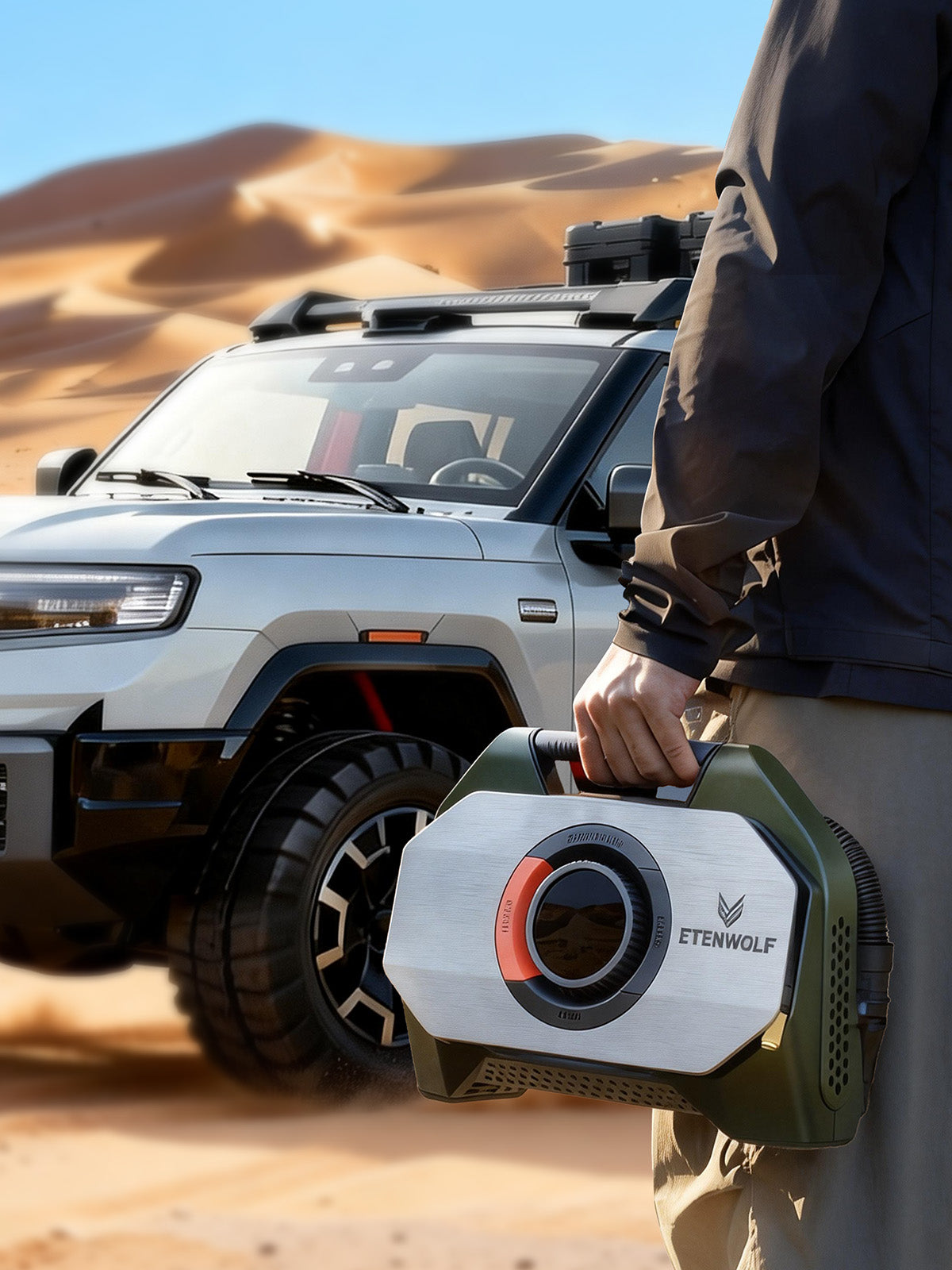
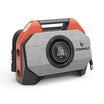
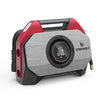
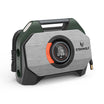
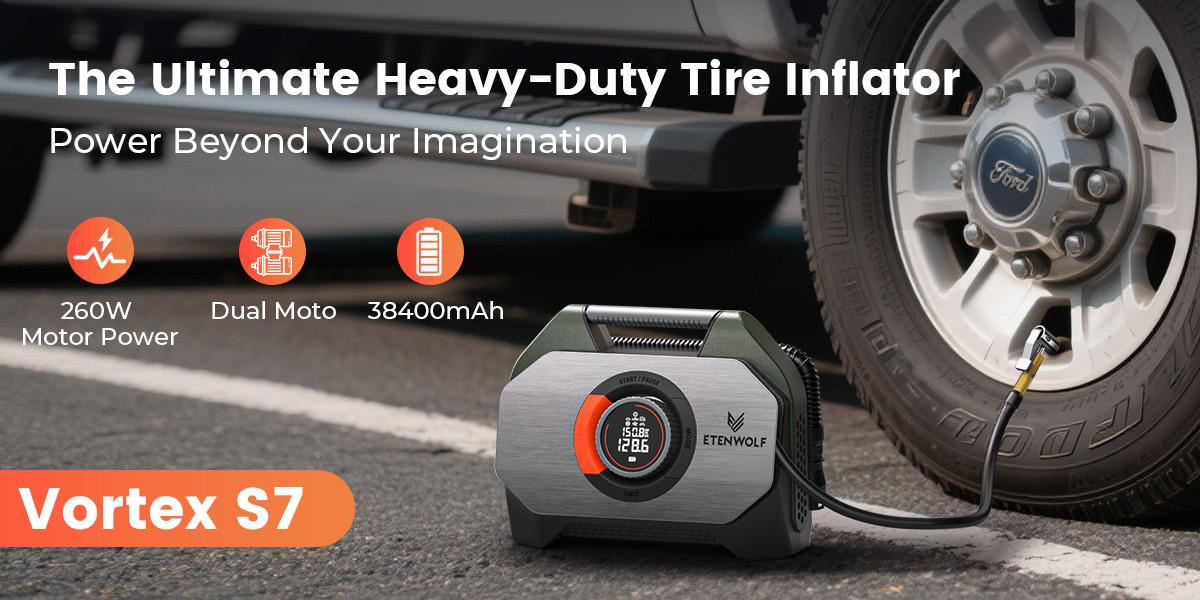
This is where the ETENWOLF Vortex S7 Heavy Duty Tire Inflator was designed differently.
The focus is not simply maximum speed.
The focus is delivering reliable inflation performance when tire volume and pressure requirements increase.
Dual Motor Power for Faster Airflow

The S7 uses:
· 260W dual motors;
· up to 1.85 CFM (52 L/min) airflow;
This higher airflow helps reduce inflation time for larger tires.
For example, the S7 can inflate a 30-inch SUV tire in approximately 30 seconds under testing conditions.
Large tires require moving more air.
Higher airflow capacity helps reduce the workload placed on the compressor.
Large Battery Capacity for Extended Use

Battery capacity is another factor many buyers overlook.
A tire inflator may perform well for one tire but struggle when multiple tires need attention.
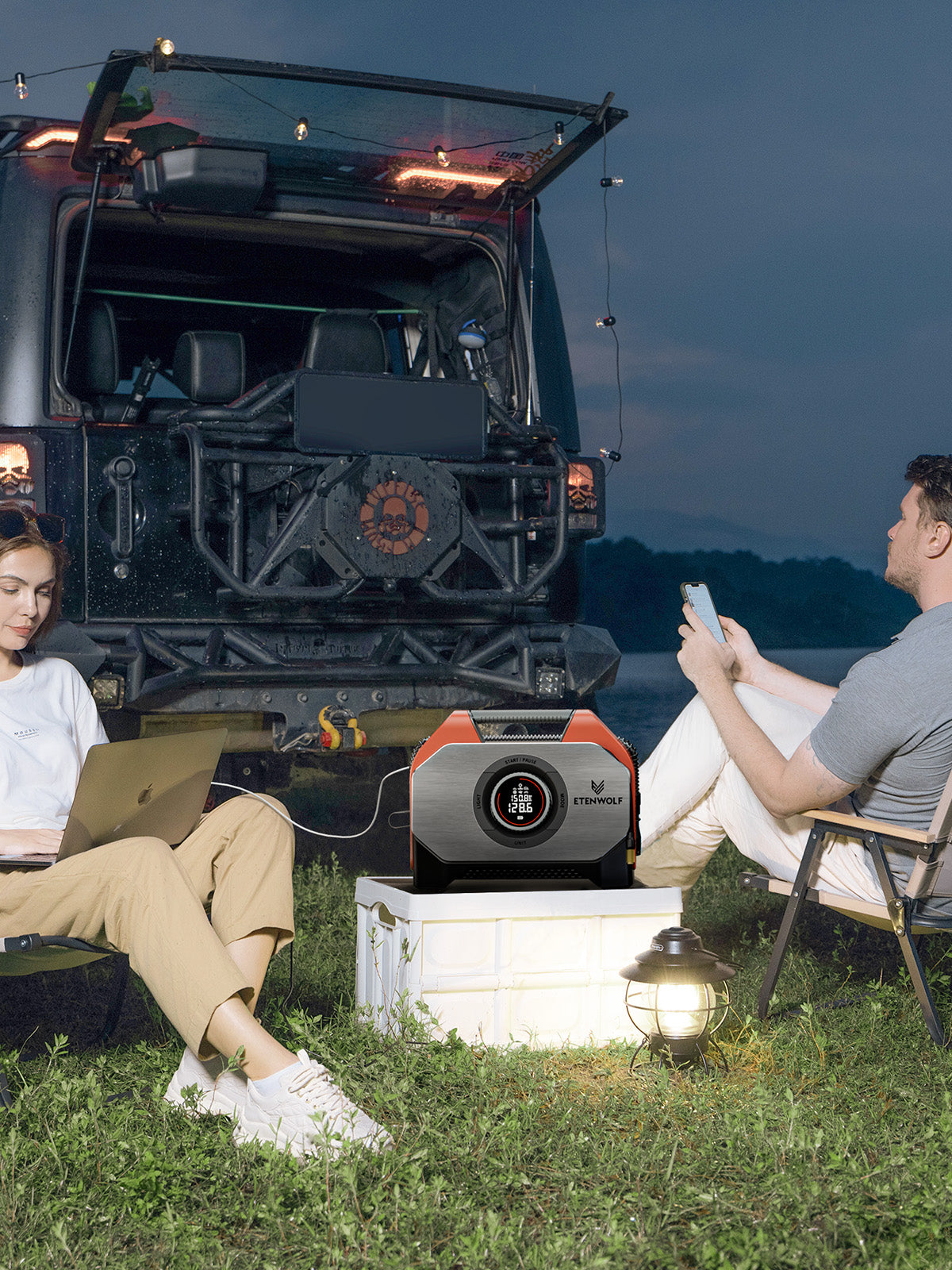
The S7 features:
· 38,400mAh lithium battery;
· USB-C 45W fast charging;
· power bank functionality.
The large battery capacity allows drivers to handle multiple inflation tasks without immediately searching for a power source.
Cooling Design for Heavy-Duty Applications
Heat is one of the biggest challenges for electric compressors.
Continuous operation creates:
· motor temperature increase;
· internal component stress;
· reduced performance.
The S7 is designed with a dedicated cooling system and a 100% duty cycle capability.
This makes it suitable for drivers who need to adjust multiple tires during:
· off-road trips;
· camping adventures;
· vehicle preparation.
Why Tire Maintenance Matters Before Adventure Driving
Many drivers only think about tire pressure when a warning light appears.
However, tire pressure should be part of regular vehicle preparation.
This is especially true before:
· road trips;
· off-road driving;
· towing;
· camping.
A tire inflator is not only an emergency tool.
It is a maintenance tool.
Keeping tires at the correct pressure helps drivers avoid unnecessary problems before they happen.

Final Thoughts: Accuracy Matters More Than Just Speed
A tire inflator is a simple tool, but using one correctly requires understanding what happens inside the tire.
Pressure changes after inflation are not always a sign of failure.
They are often caused by:
· air temperature changes;
· compressed air behavior;
· pressure stabilization;
· measurement timing.
The best tire inflator is not necessarily the one that pushes the most air as quickly as possible.
A good inflator balances:
· speed;
· accuracy;
· temperature control;
· reliability.
Features like automatic shut-off and controlled final-stage inflation are not limitations. They are designed to help drivers reach the pressure they actually need.
For drivers with standard vehicles, a compact inflator may be enough.
For pickup owners, SUV drivers, and off-road enthusiasts who need more airflow and longer operating capability, a heavy-duty solution like the ETENWOLF Vortex S7 provides the additional performance needed for demanding situations.
A few minutes checking tire pressure today can prevent a much bigger problem tomorrow.
FAQs
Why does my tire pressure drop after inflation?
Tire pressure may drop after inflation because the compressed air inside the tire cools down and stabilizes. A small pressure change does not always indicate a leak.
Why does my tire inflator slow down near the end?
A tire inflator slows near the target pressure because higher internal tire pressure creates more resistance. Reducing speed helps maintain pressure accuracy and control heat.
Is automatic shut-off good on a tire inflator?
Yes. Automatic shut-off helps prevent overinflation and allows users to reach the desired PSI without constantly monitoring the display.
Why is my tire inflator not reaching the set pressure?
Possible causes include:
· incorrect PSI settings;
· poor valve connection;
· insufficient airflow capacity;
· overheating protection.
Are digital tire inflators accurate?
Quality digital tire inflators can provide accurate readings when used correctly. Accuracy depends on sensor quality, calibration, and proper operating conditions.
Should I inflate tires when they are hot or cold?
For the most accurate reading, check and inflate tires when they are cold before driving.
Does a higher PSI rating mean a better tire inflator?
Not necessarily. Maximum PSI does not indicate airflow capacity, battery performance, or continuous operating ability.
What tire inflator is best for trucks and SUVs?
Truck and SUV owners should look for:
· high airflow;
· strong battery capacity;
· cooling performance;
· reliable pressure control.
Heavy-duty inflators like ETENWOLF S7 are designed specifically for these requirements.


Leave a comment
All comments are moderated before being published.
This site is protected by hCaptcha and the hCaptcha Privacy Policy and Terms of Service apply.