































You open the trunk of an older gasoline vehicle and lift the floor panel.
There it is.
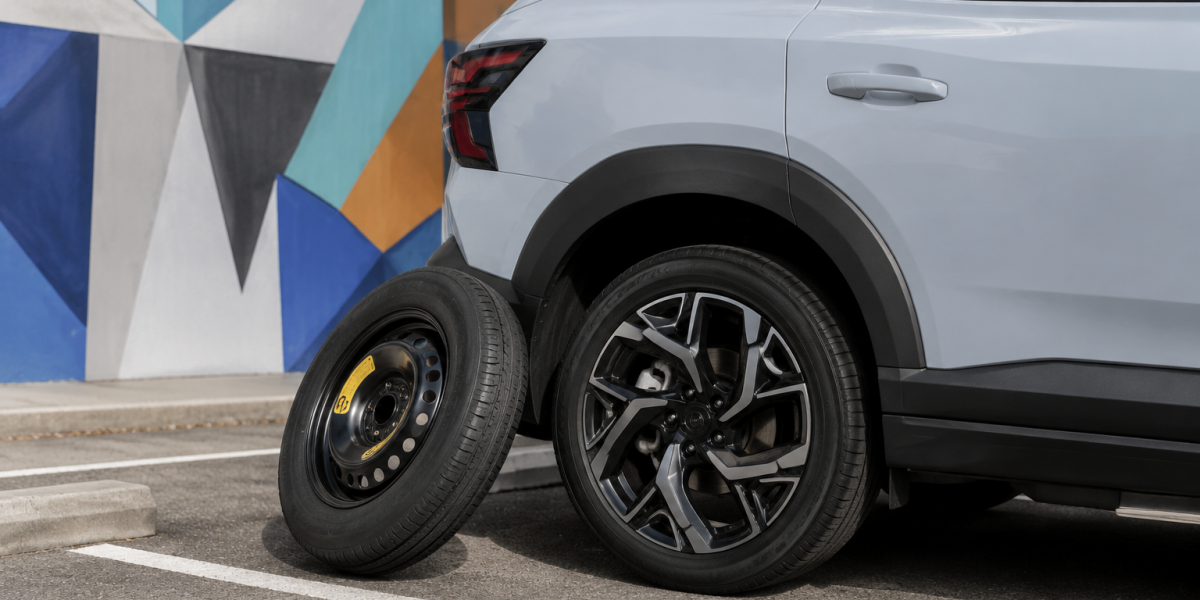
A spare tire.
Maybe it is a full-size tire. Maybe it is a temporary donut spare. But just knowing it is there provides a certain level of confidence.

Now compare that experience with many modern electric vehicles.
You open the trunk.
Lift the cover.
And there is no spare tire.
No jack.
No lug wrench.
Instead, you may find extra storage space, charging equipment, a tire repair kit, or nothing at all.
For many new EV owners, this creates an obvious question:
Why don’t electric cars have spare tires?
Did manufacturers forget about flat tires?
Are EV tires more reliable?
Or is there another reason behind this design change?
The answer is actually related to how electric vehicles are built.
The disappearance of the spare tire is not an accident. It is a result of different engineering priorities, including battery packaging, vehicle weight, efficiency, and alternative roadside solutions.
Understanding these changes can also help EV owners prepare for one of the most common unexpected problems on the road: a flat tire.
Do Electric Cars Have Spare Tires?
The short answer is:
Some do, but many do not.
Unlike traditional gasoline vehicles, where spare tires were once almost standard equipment, many EV manufacturers have chosen different solutions.
Instead of carrying a spare tire, many electric vehicles rely on:
· tire sealant kits;
· portable tire inflators;
· tire repair kits;
· roadside assistance services.
The exact equipment depends on the manufacturer and model.
For example, some vehicles include temporary repair solutions from the factory, while others expect owners to rely on roadside assistance if serious tire damage occurs.
This means EV owners should understand their vehicle's emergency equipment before they actually need it.
A flat tire on a gasoline vehicle may mean:
“Find the spare tire and replace it.”
A flat tire on an EV may require:
“Repair the puncture, temporarily restore pressure, or call for assistance.”
This difference makes preparation more important for EV drivers.
Why Are Spare Tires Disappearing From Electric Vehicles?
The reason is not that automakers no longer care about flat tires.
It is because EV design has changed dramatically compared with traditional vehicles.
There are four major reasons why spare tires are becoming less common.
1. Battery Packs Take Up Space Where Spare Tires Used to Be

The biggest difference between an EV and a gasoline vehicle is the battery system.
Most electric vehicles use a large battery pack mounted underneath the vehicle floor.
This design provides several advantages:
· lower center of gravity;
· improved handling;
· more cabin space;
· better weight distribution.
However, it also changes the available storage area.
Traditional vehicles often store the spare tire underneath the cargo floor because the fuel tank and drivetrain layout allow that space.
EV platforms are designed differently.
The large battery pack occupies much of the underbody area, leaving fewer convenient locations for a spare tire.
According to the U.S. Department of Energy, electric vehicles use large battery systems as a core component of their design, which affects vehicle structure, packaging, and weight distribution. (Source)
2. EV Weight Makes Every Pound More Important
One of the biggest misconceptions about EVs is that removing a spare tire is only about saving trunk space.
Weight is also a major factor.
Battery packs are heavy.
Although electric motors are highly efficient, the battery required to provide long driving range adds significant mass compared with many gasoline vehicles.
Additional weight affects:
· energy consumption;
· acceleration efficiency;
· tire load;
· suspension components.
Every extra pound matters because an EV must move that weight every mile.
This is why manufacturers carefully evaluate every component added to the vehicle.
A spare tire, wheel, jack, and tools can add dozens of pounds.
For a gasoline vehicle, that tradeoff may be acceptable.
For an EV designed around maximum range and efficiency, manufacturers often choose lighter alternatives.
3. EV Efficiency Depends on Reducing Unnecessary Weight

Range anxiety remains one of the biggest concerns among EV drivers.
Unlike gasoline vehicles, where refueling takes only a few minutes, EV charging requires more planning.
Because of this, manufacturers focus heavily on efficiency.
Reducing unnecessary weight helps improve:
· driving range;
· energy consumption;
· overall vehicle efficiency.
This is similar to how automakers optimize aerodynamic design.
Small improvements across many components can contribute to better efficiency.
Removing a spare tire is one of those design decisions.
4. Manufacturers Use Alternative Flat Tire Solutions
Instead of a traditional spare tire, many EV manufacturers rely on other solutions.
Common alternatives include:
Tire Repair Kits

A repair kit can seal certain punctures temporarily, allowing drivers to reach a repair facility.
However, repair kits are not designed for every type of tire damage.
For example:
· small tread punctures may be repairable;
· sidewall damage usually requires professional replacement.
Related article:
Can a Tire Inflator Fix a Flat Tire — And Why It Still Matters
Portable Tire Inflators

A tire inflator can restore lost air pressure caused by slow leaks or minor pressure loss.
This is especially useful because many tire problems begin before a complete flat tire occurs.
A tire slowly losing pressure can often be detected and corrected before it becomes a roadside emergency.
Related article:
Tire Inflator Troubleshooting: Why PSI Changes After Inflation
Are EV Tires Under More Stress Than Gasoline Vehicle Tires?
Removing the spare tire is only one part of the EV ownership experience.
Another important difference is that electric vehicles place unique demands on their tires.
Many drivers assume that because EVs have fewer moving parts than gasoline vehicles, tire maintenance should also be easier.
However, tires on electric vehicles often work harder because of three major factors:
1. Higher vehicle weight
2. Instant electric motor torque
3. Different driving characteristics
Understanding these differences explains why proper tire care becomes even more important for EV owners.
1. EVs Are Usually Heavier Than Similar Gas Vehicles
The battery pack is the heart of an electric vehicle, but it also adds significant weight.
A comparable electric model can often weigh several hundred pounds more than its gasoline counterpart.
That additional weight affects the tires because every tire must support more load.
Higher vehicle weight can influence:
· tire wear;
· braking distance;
· suspension load;
· rolling resistance.
Michelin explains that EV tires are specifically engineered to handle challenges such as increased vehicle weight and instant torque delivery. (Source)
2. Instant Torque Creates More Tire Stress
One of the biggest differences between EVs and gasoline vehicles is acceleration.
Electric motors can deliver maximum torque almost immediately.
That means when a driver presses the accelerator:
The vehicle responds instantly.
This is one of the reasons EVs feel so quick.
However, that immediate power also transfers directly through the tires.
Frequent hard acceleration can increase:
· tread wear;
· tire heat;
· traction demand.
This does not mean EV tires are unsafe.
It simply means tire condition and maintenance become more important.
3. Tire Pressure Has a Bigger Role in EV Efficiency
Many EV owners focus on battery charging but overlook something much simpler:
Tire pressure.
Underinflated tires create more rolling resistance.
That means the motor needs more energy to move the vehicle.
The U.S. Department of Energy highlights that proper tire inflation can improve vehicle efficiency by reducing rolling resistance. (Source)
For gasoline vehicles, incorrect tire pressure may mainly affect fuel economy.
For EVs, it can also affect driving range.
A small pressure difference repeated over thousands of miles can reduce efficiency and increase tire wear.
Why Tire Pressure Matters More When Your EV Has No Spare Tire
For decades, drivers relied on spare tires as a backup plan.
A flat tire happened:
1. Pull over.
2. Install spare tire.
3. Continue driving.
But many EV owners no longer have that option.
This changes the strategy.
Instead of only reacting after a tire problem happens, prevention becomes more valuable.
Maintaining proper tire pressure helps reduce the chance of:
· excessive tire flexing;
· overheating;
· uneven wear;
· unexpected tire damage.
NHTSA emphasizes that maintaining correct tire pressure is an important part of vehicle safety. (Source)
A simple tire pressure check before a trip can be much easier than dealing with a flat tire on the side of the road.
What Happens If Your EV Gets a Flat Tire?
This is where many new EV owners discover an uncomfortable reality:
A flat tire is not always solved the same way as it was before.
The solution depends on the type of damage.
Situation 1: Slow Pressure Loss
Sometimes a tire is not completely flat.
It may simply be losing air because of:
· a small puncture;
· temperature changes;
· valve issues.
In this situation, a portable tire inflator can restore pressure temporarily and help you reach a repair location.
Situation 2: Small Tread Puncture
If the puncture is located in the repairable tread area, a tire plug kit may provide a temporary or emergency repair solution.
A quality repair kit allows drivers to avoid waiting hours for roadside assistance.
However, tire repairs should always follow proper safety guidelines.
Large punctures or sidewall damage should be inspected by professionals.
Situation 3: Severe Tire Damage
Some damage cannot be repaired.
Examples include:
· sidewall cuts;
· large tears;
· structural damage.
In these situations, roadside assistance or professional tire replacement is required.
This is why carrying emergency equipment does not replace proper tire care.
It simply gives drivers more options.
A Practical EV Emergency Setup: Inflation + Repair
Since many EVs do not include traditional spare tires, some owners choose to carry two simple tools:
1. Tire Inflator
For:
· maintaining tire pressure;
· handling slow leaks;
· adjusting pressure before long trips.
2. Tire Repair Kit
For:
· temporary puncture repairs;
· emergency situations away from service locations.
Together, they provide a more complete tire emergency solution.
ETENWOLF S7: Helping EV Owners Stay Prepared Without a Spare Tire

For EV owners, especially those driving:
· electric SUVs;
· larger EV models;
· vehicles used for road trips;
having a reliable tire inflator can provide additional confidence.
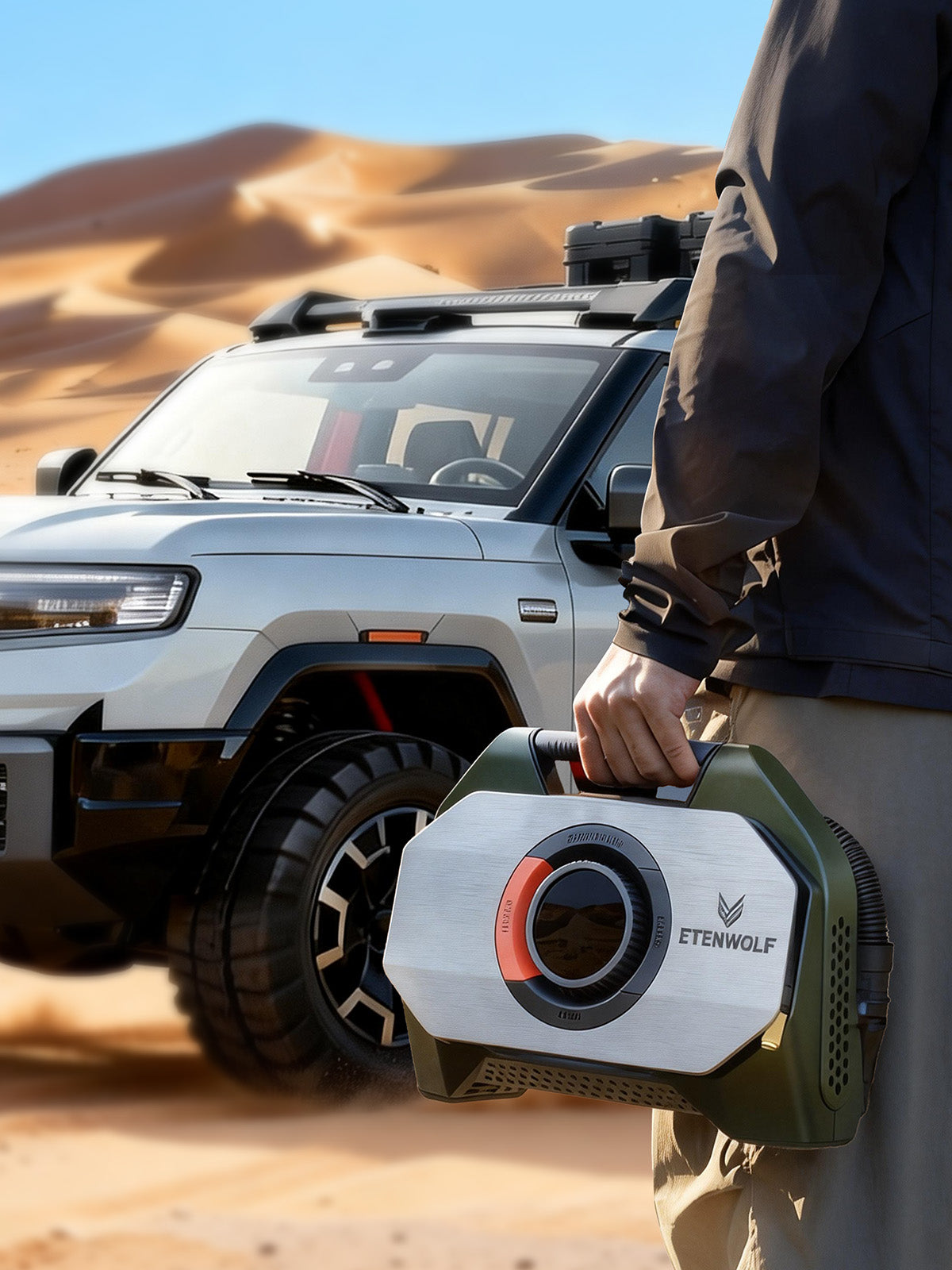
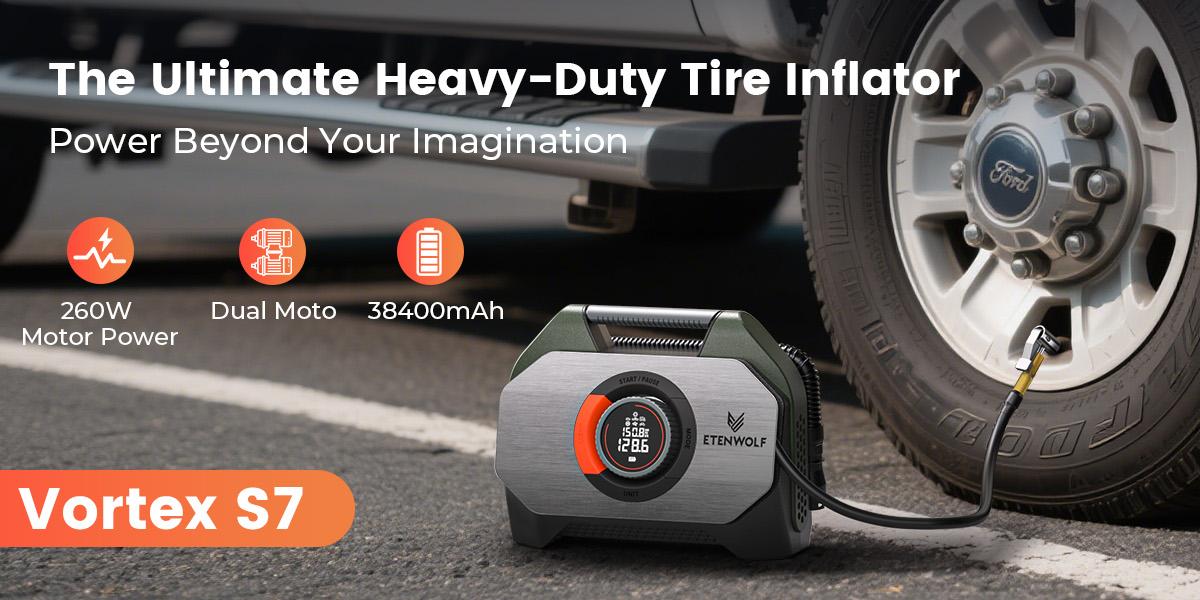
The ETENWOLF Vortex S7 Heavy Duty Tire Inflator was designed for drivers who need more than a small emergency pump.
Its design focuses on high airflow, battery capacity, and consistent performance.
Built for Larger Tires

The S7 features:
· 260W dual motors;
· up to 1.85 CFM (52 L/min) airflow;
· 160 PSI maximum pressure.
This makes it suitable not only for regular vehicles but also for larger SUVs, pickups, and heavier vehicles.
Large Battery Capacity for Roadside Situations

Many EV owners already understand the importance of battery capacity.
The same idea applies to a portable tire inflator.
The S7 includes:
· 38,400mAh lithium battery;
· USB-C 45W fast charging;
· power bank capability.
Because it does not require a wall outlet, it can be used:
· at home;
· in parking areas;
· during road trips;
· in remote locations.
Designed for Accurate Inflation
Speed is useful, but accuracy matters.
The S7 includes:
· digital pressure display;
· automatic shut-off;
· pressure monitoring.
The goal is not simply adding air.
The goal is reaching the correct tire pressure.
ETENWOLF R1 Flat Tire Repair Kit: Another Layer of Protection

A tire inflator can restore air pressure.
But it cannot repair every puncture.
That is why some EV owners also carry a compact tire repair kit.
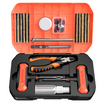
The ETENWOLF R1 Flat Tire Repair Kit with Plugs 42 Pcs is designed for tubeless tire emergencies.
It includes:
· stainless steel T-handle tools;
· ergonomic rubber-coated handles;
· 0.14-inch and 0.18-inch repair plugs;
· compact storage case.
The different plug sizes allow drivers to handle different puncture situations.
Its universal design supports many tubeless tire applications, including:
· cars;
· motorcycles;
· trucks;
· SUVs;
· trailers;
· ATVs.
For EV owners without a spare tire, a repair kit can provide an additional backup option when a simple puncture happens.
Final Thoughts: EVs Changed the Way We Think About Tire Emergencies
Electric vehicles did not remove spare tires because flat tires no longer exist.
They removed them because EV design priorities changed.
Battery placement, vehicle weight, efficiency goals, and alternative solutions all influenced this decision.
For EV owners, the lesson is simple:
The absence of a spare tire means prevention becomes more important.
Regular tire pressure checks, proper maintenance, and carrying practical emergency tools can make unexpected situations much easier to handle.
A tire inflator and repair kit will not replace professional tire service.
But they can provide something valuable:
Time.
Confidence.
And the ability to handle small problems before they become major ones.
Whether you drive an EV, SUV, truck, or traditional gasoline vehicle, keeping your tires properly maintained is one of the simplest ways to protect your investment and your safety.
FAQs
Why don’t electric cars have spare tires?
Many electric cars do not include spare tires because battery packs take up space, reducing available storage areas. Manufacturers also remove spare tires to reduce weight and improve efficiency.
Do Tesla cars come with spare tires?
Tesla models do not come with a traditional spare tire from the factory. Many owners rely on tire repair kits, inflators, or roadside assistance.
What happens if an EV gets a flat tire?
Depending on the damage, EV owners may use a tire inflator, repair kit, or roadside assistance. Serious damage may require professional tire replacement.
Are EV tires different from normal tires?
Yes. EV tires are often designed to handle additional vehicle weight, instant torque, and efficiency requirements.
Do electric vehicles need tire pressure checks?
Yes. Proper tire pressure is important for safety, tire lifespan, and EV driving efficiency.
Can a tire repair kit fix an EV tire?
A tire repair kit may repair certain tread punctures on tubeless tires, but it cannot repair sidewall damage or major structural problems.
Why do EV tires wear faster?
EV tires may experience faster wear because of heavier vehicle weight and instant torque delivery from electric motors.
Should EV owners carry a tire inflator?
Carrying a portable tire inflator can be useful because many EVs do not include spare tires.


Leave a comment
All comments are moderated before being published.
This site is protected by hCaptcha and the hCaptcha Privacy Policy and Terms of Service apply.