





























You remove a small metal component from the engine and immediately understand why it might be having a bad day.
The inside is black.
Not dusty-black. Not "this could use a wipe" black.
It's the thick, baked-on carbon you expect to find somewhere in an exhaust system, not in a valve connected to the engine's intake side.
And that leads to a perfectly reasonable question:
Why would an engine deliberately send dirty exhaust back into itself?
That is essentially what the EGR system does.
It sounds counterproductive until you understand what happens inside the combustion chamber. The exhaust isn't being sent back because the engine wants to burn it twice. It is being used to control combustion temperature—and, in doing so, reduce the formation of harmful nitrogen oxides.
That makes the humble EGR valve an interesting piece of engineering: it spends its life handling dirty exhaust because doing so helps the engine produce cleaner exhaust.
Unfortunately, that job can eventually make the valve dirty enough to cause trouble of its own.
So what exactly does an EGR valve do? Why does carbon build up inside it? And if it gets dirty, can you clean an EGR valve yourself?
Let's start with the part that makes the whole system make sense.
What Is an EGR Valve?
EGR stands for Exhaust Gas Recirculation.
An EGR system routes a controlled amount of exhaust gas back toward the engine's intake so it can mix with the incoming charge before combustion.
The key word is controlled.
The engine does not simply dump exhaust into the intake all the time. Depending on the engine design, operating temperature, load and other conditions, the engine management system determines how much EGR flow is appropriate.
Older systems often used vacuum-operated valves. Modern systems are frequently electronically controlled and may include position sensors, coolers and additional control hardware.
The recycled exhaust acts largely as an inert part of the mixture. With less oxygen available during that combustion event, peak combustion temperature can be reduced. That matters because high combustion temperatures encourage the formation of nitrogen oxides, or NOx. (Source)
A simple way to think about it is:
The engine uses a carefully measured amount of its own exhaust to make combustion cooler.
Not cooler in the sense that the engine becomes cold—just enough to help control the conditions that promote NOx formation.
Why Does an EGR Valve Help Reduce Pollution?
This is where the EGR valve becomes more than another part that can trigger a check-engine light.
The problem is NOx
Nitrogen oxides are a family of reactive gases formed during combustion. Nitrogen dioxide, or NO₂, is one of the main compounds used to represent this broader group.
The U.S. Environmental Protection Agency says NO₂ is produced primarily through fuel combustion, including emissions from cars, trucks, buses, power plants and off-road equipment.
NOx isn't just an abstract number on an emissions report.
EPA explains that nitrogen oxides contribute to the formation of ground-level ozone and particulate matter. NO₂ exposure can also irritate the respiratory system, while nitrogen oxides contribute to environmental problems including acid rain, haze and nutrient pollution in waterways. (Source)
Where EGR comes in
Combustion temperature has a strong relationship with NOx formation.
By introducing controlled exhaust gas into the intake charge, the EGR system reduces the oxygen concentration and lowers peak combustion temperature.
So the basic chain looks like this:
Exhaust gas recirculated
↓
Less oxygen in the fresh charge
↓
Lower peak combustion temperature
↓
Less NOx formation

That's why a functioning EGR system matters from an emissions perspective.
And it also explains why simply removing or disabling the system is not an environmentally responsible "fix."
Why Do EGR Valves Get So Dirty?
The irony is hard to miss.
The EGR valve reduces pollution by spending much of its working life exposed to exhaust.
That exhaust can carry soot and combustion residue. Oil vapor entering through other parts of the engine can make the buildup even stickier.
Over time, deposits can accumulate around:
· the valve pintle;
· valve seat;
· EGR passages;
· nearby intake passages.
Carbon and soot buildup that restricts valve movement is a common cause of premature EGR valve problems. It also notes that oil contamination, incomplete combustion, and repeated short-distance or low-load driving can contribute to EGR issues.
Put another way:
The EGR valve is doing an environmentally useful job in one of the dirtiest places in the engine.
Eventually, the dirt can interfere with the job.

What Are the Symptoms of a Dirty or Faulty EGR Valve?
This is where online diagnosis can get messy.
An EGR problem does not produce one magical symptom that proves the valve needs cleaning.
Depending on whether the valve is stuck open, stuck closed or simply not flowing enough exhaust gas, a driver may notice:
· rough or unstable idle;
· hesitation or jerking;
· reduced engine performance;
· check-engine light;
· increased emissions;
· black smoke on some diesel applications.
But this sentence matters more than the list:
Those symptoms do not automatically mean the EGR valve is dirty.
A rough idle might involve ignition, fueling or air-management problems.
Reduced power could come from dozens of causes.
And an EGR-related diagnostic trouble code does not necessarily mean that carbon inside the valve itself is the root cause.
Good diagnosis comes before good cleaning.
Can You Clean an EGR Valve Instead of Replacing It?
Sometimes.
And this is where a lot of "how to clean an EGR valve" guides oversimplify things.
If a serviceable mechanical valve is sticking because removable carbon has accumulated around the valve or passage, cleaning may restore normal movement.
But cleaning cannot repair:
· a failed electrical actuator;
· damaged internal electronics;
· a broken position sensor;
· worn mechanical components;
· damaged wiring;
· a failed vacuum-control system.
EGR problems can involve electrical and actuator faults in addition to carbon contamination.
There's another complication.
Not every EGR manufacturer recommends cleaning its components.
That means the first step in any EGR cleaning job isn't grabbing a can of cleaner.
It's finding out whether your particular valve is designed to be serviced that way.
How to Clean an EGR Valve

The following is a general process for a removable, serviceable EGR valve when the vehicle manufacturer's repair information permits cleaning.
Your engine may be different.
Electronic EGR assemblies, integrated EGR coolers and some modern diesel systems can require different procedures, diagnostic equipment or adaptation after service.
Step 1: Confirm the EGR Valve Is Actually the Problem
Before removing parts, diagnose the complaint.
If the check-engine light is on, retrieve the diagnostic codes.
Common EGR-related codes can include the P0400 family, but a code indicating low or excessive EGR flow still doesn't prove the valve itself is defective. Restricted passages, sensors and control problems can produce similar faults. (Source)
If you're not comfortable diagnosing the system, this is a good point to involve a qualified technician.
Step 2: Let the Engine Cool
The EGR system deals directly with exhaust gas.
That means parts around it can become extremely hot.
Don't finish a highway drive, open the hood and immediately start unbolting exhaust-related components.
Park the vehicle, switch the engine off and allow it to cool fully before working around the valve.
Step 3: Find the Valve and Check the Service Procedure
The EGR valve is commonly located near the intake manifold, with plumbing connecting it to the exhaust side of the engine.
But "commonly" isn't the same as "always."
Before removing anything, consult repair information for your:
year + make + model + engine.
This is particularly important on vehicles where the EGR valve is integrated with an EGR cooler or other emissions hardware.
Step 4: Photograph Everything Before Disconnecting It
Your phone may be the most useful tool you pick up during this job.
Before disconnecting:
· electrical plugs;
· vacuum hoses;
· brackets;
· small lines;
take a few clear pictures.
Five minutes later, two similar-looking connections can become surprisingly difficult to remember.
It's easier to take ten unnecessary photos than spend an hour wondering where one hose originally went.
Step 5: Disconnect the Valve Carefully
Follow the vehicle's service procedure.
Depending on the system, that can mean disconnecting an electrical connector, vacuum line or both before removing the mounting bolts.
NAPA's EGR-cleaning procedure similarly calls for disconnecting the appropriate hoses and electrical connections before removing a serviceable valve from the engine. (Source)
Pay attention to the gasket as the valve comes away.
If the manufacturer specifies a replacement gasket, don't try to save a damaged old one.
Step 6: Inspect Before Reaching for Cleaner
Look at what you actually have.
Carbon deposits generally appear dark and hard around the valve and gas passages.
Ask a few questions first:
Does the valve appear physically damaged?
Is the connector cracked?
Are electrical components contaminated?
Is the valve mechanism visibly broken?
Is there an unusually large amount of oily residue?
Heavy contamination can sometimes be a symptom of another engine problem, not the original problem itself.
Cleaning the valve without addressing that underlying condition may simply mean cleaning it again later.
Step 7: Clean Carbon Only If the Component Allows It
For a serviceable valve, use a cleaner appropriate for the component and follow its instructions.
NAPA's published procedure describes applying cleaner to carbon deposits on the removed valve, then loosening deposits with a small brush or pipe-cleaning tool. It also cautions against exposing plastic and electronic parts to chemicals that could damage them. (Source)
That last part deserves emphasis:
Do not soak electronic components.
Modern EGR valves may contain motors and position electronics.
Don't treat the entire assembly like a dirty bolt and drop it into solvent.
Work on the carbon-contaminated gas path only when the manufacturer's instructions allow it.
Remove deposits gradually rather than gouging the metal.
And avoid scratching mating or sealing surfaces.
Step 8: Don't Blow Loose Carbon Into the Engine
You're trying to remove deposits, not relocate them.
Avoid pushing chunks of carbon deeper into the intake.
NAPA's cleaning guidance specifically cautions against using compressed air in a way that could send loosened debris back into the engine—or back toward you. (Source)
Clean accessible passages carefully.
If the intake system itself is heavily carbonized, the job may be larger than a simple EGR-valve cleaning.
Step 9: Reinstall the Valve Correctly
Once the component is clean and completely dry:
· install the correct gasket if required;
· reinstall the valve;
· tighten fasteners to manufacturer specification;
· reconnect vacuum lines;
· reconnect electrical plugs.
Don't guess at critical torque specifications when factory service data is available.
Step 10: Start the Engine and Verify the Repair
Listen to the idle.
Check for leaks.
Make sure the warning light doesn't immediately return.
And remember that some electronically controlled EGR systems may require a relearn, adaptation or diagnostic-tool procedure after repair or replacement.
A car starting successfully is good.
It isn't proof that the original fault has been solved.
When Should You Replace an EGR Valve Instead of Cleaning It?
A useful rule is to separate contamination from failure.
| What You Find | Cleaning May Be Reasonable | Diagnosis / Replacement More Likely |
|---|---|---|
| Accessible carbon deposits | ✓ | |
| Serviceable valve sticking from deposits | ✓ | |
| Dirty removable EGR passage | ✓ | |
| Failed electric actuator | ✓ | |
| Damaged position sensor | ✓ | |
| Broken connector or wiring fault | ✓ | |
| Physical damage | ✓ | |
| Valve still fails after cleaning | ✓ | |
| Manufacturer says component should not be cleaned | ✓ |
And if the valve repeatedly becomes heavily contaminated, don't just keep cleaning it.
Find out why.
Don't Delete the EGR System to Avoid the Problem
You will inevitably find forums, videos and aftermarket products suggesting an EGR delete.
For a U.S. road vehicle, that creates a much bigger issue than dirty hands.
The EPA identifies EGR systems as emissions-control equipment and states that the Clean Air Act prohibits removing or rendering required emissions-control devices inoperative. EPA's enforcement guidance specifically includes systems that block or defeat EGR operation among examples of prohibited tampering or defeat-device behavior. (Source)
So cleaning a serviceable valve and repairing a malfunction are legitimate maintenance questions.
Disabling the system so it no longer performs its emissions-control function is a very different thing.
Does Cleaning an EGR Valve Help the Environment?
A freshly cleaned EGR valve does not suddenly turn an older gasoline or diesel vehicle into a zero-emission car.
That's not what the system does.
A better way to think about it is:
Maintaining the EGR system helps the vehicle's existing emissions-control system continue operating as designed.
When a malfunctioning EGR valve reduces or eliminates the intended recirculation, combustion temperatures can increase and NOx emissions can rise.
That's the environmental value of EGR maintenance.
Not creating a "green car."
Simply avoiding unnecessary pollution caused by equipment that isn't working properly.
Efficient Driving Doesn't Stop Inside the Engine
The EGR system handles emissions from inside the engine.
But vehicle efficiency isn't determined entirely under the hood.
Sometimes wasted energy comes from where the vehicle meets the road.
Tire pressure is a good example.
Underinflated tires increase rolling resistance, which means the engine has to use more energy to move the vehicle.
FuelEconomy.gov—the fuel-economy resource administered by Oak Ridge National Laboratory for the U.S. Department of Energy and EPA—estimates that maintaining correct tire pressure can improve gasoline mileage by about 0.6% on average and up to 3% in some cases. It also estimates roughly a 0.2% reduction in fuel economy for each 1 PSI decrease in the average pressure across all tires. (Source)

Those numbers aren't enormous.
That's precisely why this is worth talking about honestly.
There is no single maintenance trick that suddenly turns a truck into an economy car.
Instead, efficiency comes from avoiding needless losses wherever possible.
Fix the check-engine light.
Keep emissions hardware working.
Use the correct oil.
Maintain the tires.
Avoid carrying problems for thousands of miles simply because the vehicle still runs.
Where the ETENWOLF Vortex S7 Fits In

Correct tire pressure is one of the easier maintenance items a driver can manage without opening the engine.
The challenge changes when the vehicle gets bigger.
A compact emergency inflator that feels perfectly adequate on a small sedan can become frustrating when it's connected to the higher-volume tires found on pickups, large SUVs and other heavy-duty applications.
That's where airflow, battery capacity and cooling matter.
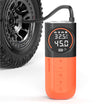
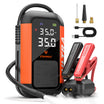
The ETENWOLF Vortex S7 Heavy Duty Tire Inflator uses dual 260W motors and delivers 52 L/min (1.85 CFM at 0 PSI) of airflow. Its 38,400mAh battery is designed to provide the endurance needed for repeated inflation without depending on a gas-station air pump or continuous vehicle power.
Just as importantly for larger tires, ETENWOLF rates the S7 for a 100% duty cycle, using a dual-cylinder design and dedicated cooling system to support continuous inflation rather than requiring frequent cooling breaks.
Those characteristics make it particularly well suited to:
· pickups;
· trucks;
· large SUVs;
· off-road vehicles;
· other large-volume vehicle tires.

An inflator doesn't make a gasoline vehicle "green."
Its contribution is far more practical:
It makes maintaining the manufacturer's recommended tire pressure easier—even when the tires are large enough that a small pump isn't very useful.
And keeping tires properly inflated is one of the simple, measurable ways a driver can avoid wasting fuel through unnecessary rolling resistance.
Revisit great articles:
Tire Inflator Troubleshooting: Why PSI Changes After Inflation
Why Most Tire Inflators Fail on Heavy-Duty Tires
Air Compressor vs Tire Inflator: Which One Is Better for Your Car?
Final Thoughts
The EGR valve isn't glamorous.
Most drivers will never think about it until a warning light appears or the engine starts behaving strangely.
Yet its purpose is surprisingly important.
It takes something we normally want out of the engine—exhaust gas—and sends a carefully controlled amount back in to lower combustion temperature and reduce NOx formation.
That dirty job eventually means deposits can become part of the maintenance story.
If your particular EGR system is designed to be serviced, careful cleaning may help when carbon buildup is restricting movement or flow.
If the problem is electrical, mechanical or part of a system whose manufacturer does not recommend cleaning, replacing or professionally diagnosing the component is the better answer.
The same principle applies elsewhere on the vehicle.
An EGR valve works inside the engine to control emissions.
Correct tire pressure works at the road surface, reducing unnecessary rolling resistance.
Neither is a magic solution to transportation emissions.
Both are reminders that one of the simplest things an owner can do is keep the systems already built into a vehicle working the way they were intended to work.
Sometimes being a little more efficient isn't about buying something new.
It's about taking better care of what you already drive.
FAQs
What does EGR stand for?
EGR stands for Exhaust Gas Recirculation. The system redirects a controlled amount of exhaust gas into the engine's intake to help lower peak combustion temperature and reduce nitrogen oxide formation.
What does an EGR valve do?
The EGR valve controls how much exhaust gas is recirculated into the intake. Modern engines regulate EGR flow according to operating conditions rather than allowing exhaust gas into the engine continuously.
Why does EGR reduce NOx emissions?
Higher combustion temperatures promote NOx formation. Recirculated exhaust acts as an inert portion of the intake charge, lowering oxygen concentration and peak combustion temperature, which reduces NOx production.
What causes an EGR valve to get dirty?
Common contributors include carbon and soot deposits, oil contamination and combustion-related residue.
Can I clean my EGR valve myself?
Some removable, serviceable EGR valves can be cleaned when carbon deposits are the problem and the manufacturer permits it. Other electronic components may be damaged by cleaning or are intended to be replaced when defective. Always check vehicle-specific service information first.
Can I clean an EGR valve without removing it?
Products and procedures exist for intake/EGR cleaning without full removal, but whether they're appropriate depends heavily on the engine and EGR design. Removing a serviceable valve provides better access to deposits and reduces the risk of blindly sending loosened debris into the intake. Follow the vehicle manufacturer's procedure rather than assuming one method fits every engine.
Will cleaning an EGR valve turn off the check-engine light?
Only if contamination was actually responsible for the fault and cleaning restores correct operation. Electrical failures, damaged actuators, restricted passages, sensor problems and other faults will not necessarily be corrected by cleaning.
Should I clean or replace a bad EGR valve?
Cleaning may be reasonable for an approved serviceable component affected primarily by accessible deposits. Electrical failure, physical damage or a manufacturer recommendation against cleaning generally points toward repair or replacement instead.
Is an EGR delete legal in the United States?
Federal Clean Air Act provisions prohibit knowingly removing or rendering required motor-vehicle emissions-control devices inoperative. EPA specifically identifies EGR systems within its emissions-tampering guidance.
Does proper tire pressure really improve fuel economy?
Yes. FuelEconomy.gov estimates that correct tire inflation improves gas mileage by about 0.6% on average, with gains of up to 3% in some circumstances.


Leave a comment
All comments are moderated before being published.
This site is protected by hCaptcha and the hCaptcha Privacy Policy and Terms of Service apply.