

















You're cruising at 65 mph when you notice something strange.
The steering wheel isn't exactly pulling left or right. The car still goes where you point it. But there's a steady vibration running through your hands.
You slow down.
At 45 mph, it almost disappears.
Or maybe your car feels perfectly smooth until you touch the brake pedal. Then the steering wheel starts shaking hard enough that you can see it moving.
Those two problems may feel similar from the driver's seat.
Their causes can be very different.
A shaking steering wheel isn't a diagnosis. It's a symptom.
And one of the most useful clues is surprisingly simple:
When does the shaking happen?
Does it appear only at highway speed? Only while braking? After hitting a pothole? Did it start immediately after installing new tires?
Those details can help narrow the problem down considerably.

Why Is My Steering Wheel Shaking?
A steering wheel can shake because of problems involving the tires, wheels, brakes, alignment, steering system, or suspension.
One of the most common causes of vibration at highway speed is an out-of-balance tire-and-wheel assembly. Michelin notes that vibration or shimmy can be caused by wheel imbalance, while persistent vibration after balancing may point toward alignment or suspension components.
But speed-related vibration is only one pattern.
Here's a useful starting point:
| When You Feel the Vibration | What to Investigate First |
|---|---|
| Mainly around highway speeds | Wheel/tire balance |
| Only or mostly while braking | Brake system |
| After hitting a pothole | Tire or wheel damage |
| With the car pulling to one side | Tire pressure or alignment |
| After installing new tires | Balance, mounting, wheel condition |
| At many different speeds | Tire damage, wheel, steering or suspension |
| After the car sits for a long time | Tire flat spotting may be possible |
The table isn't a substitute for inspection, but it gives you somewhere much better to start than guessing.
1. Your Wheels May Be Out of Balance
If your steering wheel starts shaking somewhere around highway speed and becomes much smoother when you slow down, wheel imbalance should be high on the list.
A tire and wheel assembly isn't perfectly uniform.

There can be tiny differences in weight around the circumference. At low speeds, you may barely notice them. As rotational speed increases, however, those differences can become strong enough to create vibration.
Michelin describes vibration that appears or becomes worse within a particular speed range as a classic sign of wheel imbalance. Its wheel-balancing guidance also lists steering-wheel vibration at highway speeds as a common symptom. (Source)
This also explains a question that confuses plenty of drivers:
Why is my steering wheel shaking after getting new tires?
Because a new tire can still be improperly balanced.
New tires don't automatically guarantee a vibration-free ride. The entire tire-and-wheel assembly has to be balanced after installation.
NHTSA specifically advises that new tires should be balanced when installed and notes that proper balancing helps prevent a vehicle from shaking or vibrating. (Source)
If your car was smooth before a tire replacement and starts shaking immediately afterward, returning to the installer for a balance and mounting inspection makes sense.
2. Tire Pressure May Be Wrong — But Don't Blame Every Vibration on PSI
This one needs some nuance.
Can low tire pressure affect steering?
Absolutely.
Can low tire pressure contribute to poor handling, pulling, instability or an unusual steering feel?
Yes.
But if your steering wheel is perfectly smooth at 40 mph and suddenly shakes strongly at 60 or 65 mph, a few PSI of pressure difference isn't automatically the most likely explanation.
Michelin recommends checking tire pressure first when handling changes appear. Differences in front-tire pressure can contribute to pulling, while significantly low pressure can change the way the tire responds to steering inputs. (Source)
The smart approach is therefore simple:
Check pressure first because it's easy and important—not because every vibration is caused by low pressure.

Use the vehicle manufacturer's recommended PSI, which is normally printed on the Tire and Loading Information label on the driver's doorjamb.
Don't use the maximum PSI molded into the tire sidewall as your target.

NHTSA recommends checking all tires at least once a month while they're cold, meaning the vehicle hasn't been driven for at least three hours. It also points out that TPMS does not replace manual tire-pressure checks because the warning typically appears only after a tire is already significantly underinflated. (Source)
Go to the previous blog post: Why tire pressure can change after inflation
3. The Tire Itself May Be Damaged or Wearing Unevenly
A tire doesn't have to be flat to cause vibration.
Look at the tread carefully.
Is one side wearing much faster than the other?
Does the tread seem scalloped or "cupped"?
Is there an obvious flat spot?
Did the vibration appear shortly after hitting a pothole?
Uneven tire wear can create an inconsistent contact surface as the wheel rotates. Cupping or scalloped wear as something that can be associated with balance or suspension problems, while one-sided wear commonly points toward alignment.
There's also another possibility that's easy to miss:
Temporary flat spotting
If a vehicle sits for an extended period—especially in certain temperature conditions—the part of the tire resting on the ground can temporarily take a slightly different shape.
Michelin notes that this can cause vibration through the steering wheel or vehicle until the tire warms and returns toward its normal shape. (Source)
That kind of vibration may gradually disappear after driving.
A vibration caused by structural tire damage won't necessarily do the same.
4. Your Wheel Alignment May Be Off
Wheel alignment gets blamed for almost every steering problem.
It's important—but alignment and balance are not the same thing.
Wheel balance
Deals with how evenly the wheel-and-tire assembly rotates.
Wheel alignment
Deals with the angles at which the wheels sit relative to the road and each other.
According to Michelin, common signs of poor alignment include: (Source)
· the vehicle consistently pulling left or right;
· the steering wheel sitting off-center while traveling straight;
· uneven or rapid tire wear;
· wandering or vague steering feel.
Notice something?
A classic highway-speed vibration points more directly toward balance than alignment.
Alignment problems can still contribute indirectly. If incorrect alignment causes uneven tire wear over thousands of miles, the worn tire may eventually create its own vibration.
That's why simply paying for an alignment every time the steering wheel shakes doesn't always solve the problem.
5. If the Steering Wheel Shakes When Braking, Look Beyond the Tires
This is where the timing of the vibration becomes especially useful.
Imagine this:
At 60 mph, the steering wheel is smooth.
You touch the brake pedal.
Now it shakes.
Release the brake.
The vibration disappears.
That's very different from a wheel imbalance that produces vibration simply because the wheel is rotating at a certain speed.
Brake-related vibration can be associated with conditions involving the brake rotors/discs, including excessive runout, thickness variation, uneven friction surfaces or deformation.
Disc problems can produce vibration felt through both the brake pedal and steering wheel, while excessive disc runout can generate abnormal wear and vibration during braking.
There's also a terminology trap here.
Drivers commonly say:
"My rotors are warped."
Sometimes that description gets used for several different brake-vibration conditions.
Steering-wheel judder and brake pulsation can arise from uneven rotor surface conditions and disc-thickness variation rather than a rotor literally bending into a visibly warped shape.
You don't need to diagnose that distinction in your driveway.
The practical rule is easier:
If the steering wheel is smooth while cruising but repeatedly shakes during braking, have the braking system inspected.
Adding air to the tires isn't going to fix it.
6. You May Have Bent a Wheel or Damaged a Tire in a Pothole
Sometimes there isn't much mystery.
Everything was fine.
Then you hit a pothole hard enough to make everyone in the car wince.
Now the steering wheel shakes.
A hard impact can potentially affect:
· the wheel;
· tire structure;
· alignment;
· steering or suspension components.
Start with a visual inspection.
Look for:
· sidewall cuts;
· bubbles or bulges;
· damaged wheel edges;
· unusual tread deformation;
· sudden pressure loss.
Pay particular attention to a sidewall bubble.
Michelin says a bulge or bubble generally indicates damaged internal tire cords and states that the tire cannot be repaired; its guidance calls for replacement and professional inspection. (Source)
This is one situation where you shouldn't simply add air and see what happens.
If the tire has visible structural damage, an inflator isn't the solution.
NHTSA similarly advises drivers who notice physical tire damage or new performance changes such as vibration to consult a tire-service professional. (Source)
Go to the previous blog post: What a tire inflator can and cannot fix

7. Steering or Suspension Components Could Be Worn
If balancing doesn't solve the vibration and the tires appear healthy, the problem may be farther inside the vehicle.
Steering and suspension systems contain many components that help control wheel movement.
Depending on the vehicle, potential trouble areas can include:
· tie-rod ends;
· control-arm bushings;
· ball joints;
· wheel bearings;
· other suspension joints or mounts.
You don't need to identify the individual part yourself.
What matters is recognizing when the vibration is accompanied by other symptoms.
Pay more attention if you also notice:
· knocking or clunking sounds;
· loose or vague steering;
· the vehicle wandering;
· unusual tire movement;
· rapidly developing uneven tire wear.
We recommend having steering, alignment, and suspension components inspected when rebalancing doesn't eliminate the vibration.
At that point, this has moved beyond a tire-pressure troubleshooting exercise.
What Should You Check Yourself First?
You don't need to start taking the suspension apart in your driveway.
There are four useful observations almost any driver can make.
Check the tire pressure
Measure all four tires while they're cold and compare the readings with the pressure listed on the vehicle placard—not the sidewall maximum.
Look at the tires
Check for:
bulges, cuts, punctures, cracks, unusual wear and obvious deformation.
NHTSA recommends regular visual tire inspections alongside monthly pressure checks.
Think about what happened before the vibration started
Did you:
hit a pothole?
install new tires?
rotate the tires?
have brake work performed?
Those details matter.
Pay attention to when it shakes
Tell a technician:
"It shakes mainly between 55 and 70 mph."
That's far more useful than:
"My car shakes sometimes."
Likewise:
"It only shakes while braking from highway speed."
points the diagnostic process in a very different direction.
Is It Safe to Drive With a Shaking Steering Wheel?
It depends on the severity and cause.
A mild vibration caused by a slightly unbalanced wheel isn't the same situation as a steering wheel that suddenly starts shaking violently after a pothole impact.
If the vibration is new, severe or rapidly getting worse, reduce speed smoothly and find a safe place to stop.
You should be particularly cautious if vibration comes with:
· a tire bulge;
· rapid pressure loss;
· a strong pull to one side;
· loud knocking;
· loose steering;
· visible tire or wheel damage.
Immediate replacement rather than continued driving when a confirmed tire bulge or bubble is present.
Don't keep driving at highway speed simply because the car still moves.
A new vibration means something changed.
Finding out what changed is the important part.
Where a Portable Tire Inflator Actually Helps
A tire inflator can be useful here—but only within its lane.
It won't fix:
wheel imbalance;
incorrect alignment;
a bent wheel;
brake-disc problems;
worn suspension components;
structural tire damage.
What it can do is remove tire pressure as one of the easy variables.
If you stop, inspect the tire and find no obvious physical damage but discover one tire is genuinely below the vehicle manufacturer's recommended pressure, you can correct that pressure before continuing.
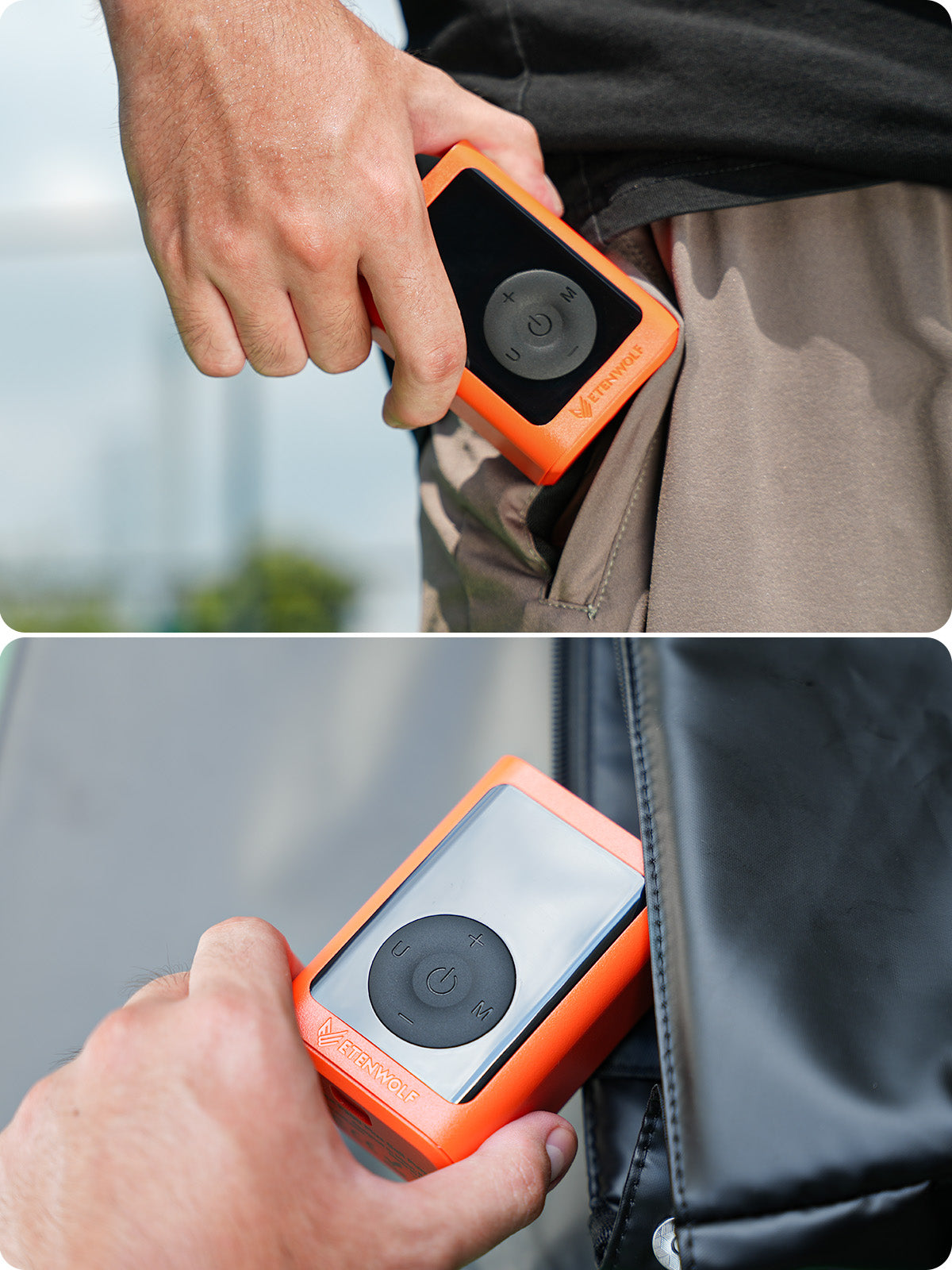
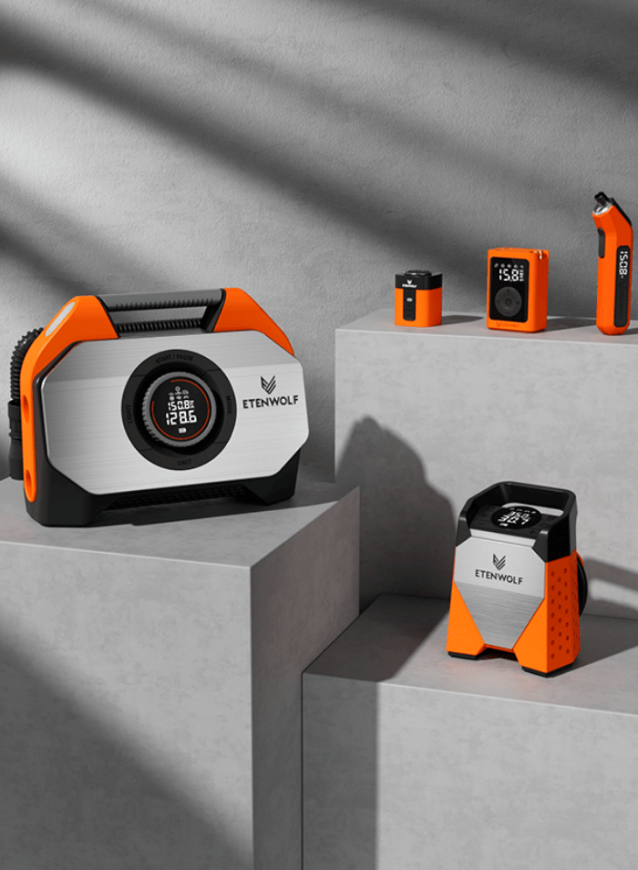
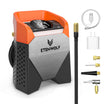
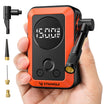
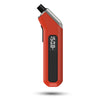
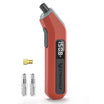
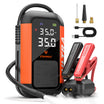
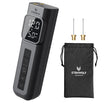
For everyday cars and SUVs, a cordless inflator such as the ETENWOLF S1 Portable Tire Inflator makes that easier without requiring a trip to a gas-station air pump.
The S1 uses a 5,200mAh battery, delivers up to 20 L/min airflow, supports pressures up to 160 PSI, displays tire pressure digitally and automatically stops when the selected pressure is reached.

The important part isn't the specification sheet.
It's knowing what the tool is—and what it isn't.
An inflator corrects air pressure. It doesn't diagnose a shaking steering wheel.
If correcting a genuinely low tire brings all four tires back to specification but the vibration remains, keep investigating.
Go to the previous blog post: What to do if the tire damage requires changing the wheel

Final Thoughts: Don't Diagnose the Shake by Guessing
A shaking steering wheel is a symptom, not a diagnosis.
That's worth remembering because several very different problems can feel surprisingly similar through your hands.
If the vibration appears mainly at highway speed, start by thinking about wheel and tire balance.
If it appears mainly while braking, the brake system deserves attention.
If the vehicle pulls or the steering wheel no longer sits straight, look harder at tire pressure and alignment.
If the problem appeared immediately after a pothole, inspect the tire and wheel before assuming the issue is minor.
And if the vibration persists after the simple checks have been completed, get the steering and suspension inspected.
Start with what you can safely check yourself:
pressure, visible tire condition and exactly when the vibration occurs.
Then resist the temptation to keep driving, adding air or replacing random parts until the symptom disappears.
The steering wheel is giving you information.
The useful part is learning how to read it.
FAQs
Why does my steering wheel shake when I brake?
Brake-related steering-wheel vibration may be associated with problems involving brake-disc surfaces, runout, thickness variation or other braking components. If the vehicle is smooth while cruising but vibrates repeatedly during braking, the brake system should be inspected.
Can low tire pressure cause the steering wheel to shake?
Incorrect or unequal tire pressure can affect vehicle handling, steering response and pulling. However, strong vibration that occurs only within a narrow highway-speed range more commonly points toward wheel imbalance. Check pressure first, then investigate further if the vibration remains.
Why is my steering wheel shaking after getting new tires?
The new tire-and-wheel assemblies may need balancing or there may be a mounting or wheel issue. NHTSA recommends balancing new tires when they're installed.
Can wheel alignment cause steering wheel vibration?
Alignment problems more typically produce pulling, an off-center steering wheel and uneven tire wear. However, prolonged misalignment can create irregular tire wear that may later contribute to vibration.
Why did my steering wheel start shaking after hitting a pothole?
A hard pothole impact can damage the tire or wheel and may alter alignment. Inspect the tire for cuts, bulges, pressure loss and deformation. A sidewall bulge indicates structural damage and requires replacement.
Can bad suspension components cause steering wheel shaking?
Yes. Michelin identifies steering and suspension malfunction as possible causes of vibration and recommends inspecting those systems if tire balancing does not solve the problem.
Is it safe to keep driving if my steering wheel shakes?
Mild vibration and severe sudden shaking are not the same problem. New, severe or rapidly worsening vibration—especially with tire damage, strong pulling, noise or loose steering—should be investigated promptly rather than ignored at highway speed.
Can a portable tire inflator fix steering wheel vibration?
Only when incorrect tire pressure is contributing to the handling problem. An inflator cannot repair wheel imbalance, alignment, brake, suspension or structural tire faults.
How often should I check tire pressure?
NHTSA recommends checking every tire at least once a month while the tires are cold. The recommended pressure should come from the vehicle's doorjamb label or owner's manual.


Leave a comment
All comments are moderated before being published.
This site is protected by hCaptcha and the hCaptcha Privacy Policy and Terms of Service apply.