































There was a time when Cindy Todd rarely needed a reason to get outside.
As a student, she played volleyball and competed in track and field. As an adult, that love of movement never really went away. Cycling, kayaking, hiking and backpacking became part of the way she experienced the world. Give her a trail, a stretch of open water or a chance to spend time somewhere far from everyday routines, and she was happy to go.
Then something changed.
There was no single dramatic moment when Cindy's active life suddenly stopped. Instead, ordinary movement began becoming difficult. Episodes would leave her struggling to walk for weeks at a time. Getting across a parking lot could take an enormous amount of effort.
For someone accustomed to trusting her body through miles of trails and outdoor adventures, losing that certainty was frightening enough.
Not knowing why it was happening made it worse.
When an Active Life Suddenly Became Difficult
As Cindy's symptoms became more frequent, the effects reached far beyond the activities she loved.
Daily life itself became exhausting.
She withdrew. Her spouse noticed that the energetic personality he knew seemed to disappear. At times, Cindy experienced unusual neurological symptoms as well. During one episode, she could no longer properly sense clothing against her skin. During another, she lost sensation below her ankles.
The physical limitations were difficult. The uncertainty was something else entirely.
When you know something is wrong but don't know what it is, almost every possibility can run through your mind.
Cindy began looking for answers.
First came visits to her doctor. Then specialists. Then more tests.
Multiple sclerosis was considered. Other possible explanations followed. None provided the answer she needed.
And the search continued.
Three Years Looking for an Answer
It took roughly three years of examinations and testing before Cindy's search finally changed direction.
At the University of Southern California, a rheumatologist suggested something that apparently had not previously been identified as the explanation for her symptoms:
Behcet's disease.
Further evaluation supported the diagnosis.
Three years is a long time to live between knowing something is wrong and finally having a name for it. Yet Cindy's experience also illustrates one of the fundamental difficulties surrounding rare diseases: diagnosis is not always straightforward.
The NIH's Genetic and Rare Diseases Information Center notes that people with rare diseases frequently visit multiple specialists or seek second opinions before finding answers. Its current guidance says that, across rare diseases generally, receiving an accurate diagnosis can take more than six years on average.
Behcet's disease presents its own diagnostic challenge.
There isn't one laboratory test that simply returns a positive or negative answer.
That helps explain why Cindy's eventual diagnosis meant so much.
It did not erase what had happened. It finally gave her something she had been missing for years:
an explanation.
What Is Behcet's Disease?
Behcet's disease is a rare, chronic inflammatory disorder involving inflammation of the blood vessels, known as vasculitis. Because blood vessels run throughout the body, the disease can affect multiple organ systems rather than presenting in one predictable way.
The U.S. National Eye Institute describes Behcet's as a rare disorder that damages blood vessels and may cause problems in different parts of the body. Symptoms can improve or disappear during periods of remission and later return. (Source)
Common manifestations can include mouth sores, genital sores, skin problems, joint pain or swelling, and inflammation of the eyes. More serious involvement can affect the nervous system, digestive system or blood vessels. The symptoms and their severity can vary considerably from one person to another.
Behcet's is particularly uncommon in the United States. MedlinePlus Genetics reports that the condition generally affects fewer than 1/100,000 people in the United States, while prevalence is considerably higher in parts of the Mediterranean, Middle East and Asia. (Source)
That rarity is part of what can make the disease so difficult to recognize.
Why can Behcet's disease take so long to diagnose?
There is no single diagnostic test for Behcet's disease.
Doctors instead consider medical history, symptoms and clinical findings while excluding other possible causes. Making matters harder, symptoms do not necessarily appear together and may come and go over time.
The National Eye Institute specifically notes that Behcet's can be difficult to diagnose because its symptoms may occur at different times and resemble those of other conditions.
MedlinePlus makes a similar point: it may take months or even years for enough symptoms to appear to support a diagnosis.
For Cindy, those aren't simply facts from a medical reference.
They describe years of her life.
A Diagnosis Didn't End the Journey
Getting a diagnosis wasn't the same thing as getting her old life back.
Cindy still had Behcet's disease.
What changed was that she finally knew what she was dealing with.
Years of trying different medications and combinations of treatments followed. Eventually, she reached a point where she could begin looking forward again rather than spending all of her energy searching for an explanation.
There is currently no cure for Behcet's disease. Treatment instead focuses on managing inflammation and symptoms and reducing the risk of serious complications. The appropriate approach depends on how the disease affects an individual, which is why care is necessarily personal.
Cindy's story did not become a simple before-and-after story in which illness disappeared and everything returned to normal.
She started thinking about other people who might still be where she had once been: frightened, searching for answers and wondering why nobody seemed able to explain what was happening.
And she wondered whether something she already loved could help.
Backpacking for Behcet's Disease Awareness

Cindy decided to return to the outdoors with a purpose.
She created Backpacking for Behcet's Disease Awareness, combining the activity she loved with an effort to bring attention to a disease that relatively few Americans have heard about.
For Cindy, backpacking had always meant more than covering miles.
There are mornings in the backcountry when the mountains catch the orange light of sunrise before the rest of the world seems awake. There are birds in the trees, wind through the branches and long stretches without the noise of everyday life.

She wanted those experiences back.
But she also wanted her time on the trail to mean something for people living with Behcet's disease.
Cindy began speaking with organizations, companies and people she met along the way, sharing her mission and bringing conversations about Behcet's into places where they otherwise might never happen.
There is an important distinction here.
Cindy isn't pretending Behcet's disease disappeared.
She is learning how to continue living alongside it.
And instead of keeping the hardest part of that experience private, she chose to use it to make the path a little less lonely for someone else.

Why Cindy's Story Stayed With Us
When Cindy shared her story with ETENWOLF, it wasn't simply the difficulty of living with a rare disease that stayed with our team.
It was what she chose to do afterward.
It would have been understandable to turn inward after years of uncertainty and fear.
Cindy went in another direction.
She went back outside.
She started talking about Behcet's disease.
She kept exploring.
And she tried to turn something that had taken so much from her into something that might help another person find answers sooner.
That kind of optimism isn't about pretending difficult things aren't difficult.
It's choosing what to do next.
We wanted to support that in a way that made sense for who we are.

A Small Piece of Support for the Road Ahead
Many of Cindy's outdoor adventures begin before she reaches a trail.
They begin with a drive.
Getting safely from home to a trailhead, campsite or another outdoor destination is an ordinary part of maintaining the independence that allows her to keep exploring.
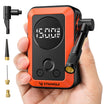
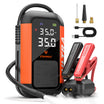
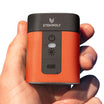
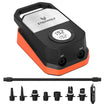
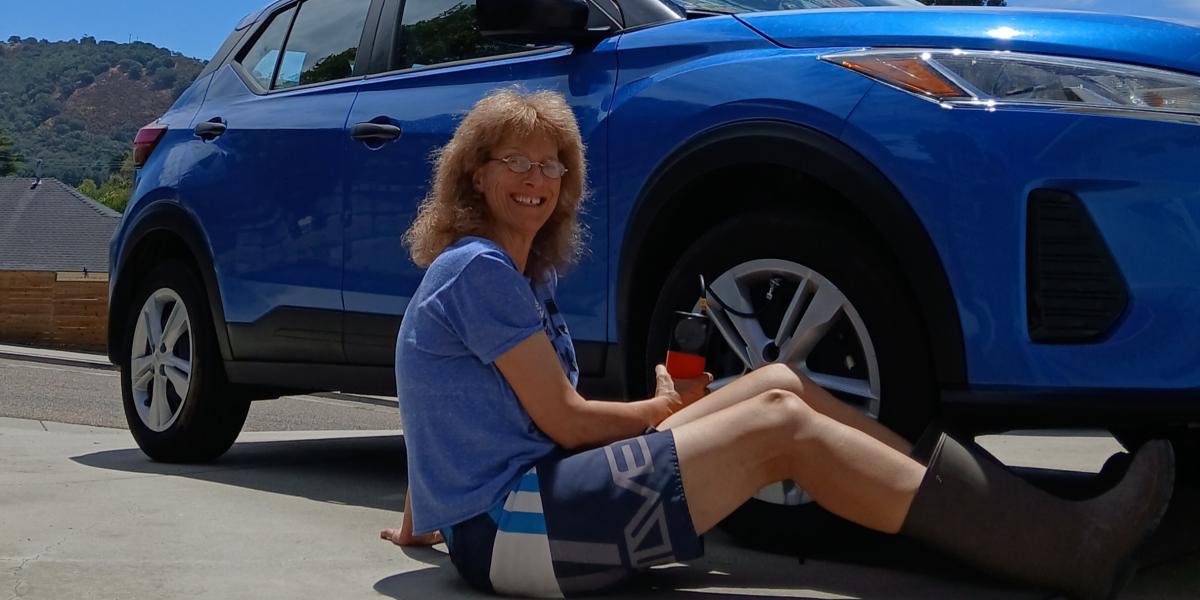
So ETENWOLF provided Cindy with an ETENWOLF S1 Portable Tire Inflator to keep with her vehicle.

It isn't a cure, and we would never present a piece of automotive equipment as anything more than what it is.
It's simply one practical tool that can make the road a little easier.
The S1 is compact enough to keep in a vehicle and has its own 5,200mAh battery, so it doesn't need to remain connected to the car while inflating. Its digital pressure display lets the driver monitor tire pressure, while automatic shutoff stops inflation after the selected pressure is reached.
For someone traveling to outdoor destinations, having a cordless inflator available also means a low tire doesn't automatically require finding a gas station air pump before continuing a journey.
After using the inflator, Cindy shared something with us that captured why this small gesture mattered:
“I confidently navigate the world, knowing that I can count on ETENWOLF’s tire inflator to keep my car tires working properly and help keep me safe.”

The equipment is a small part of the story.
Cindy is the important part.
Awareness Can Start With One Conversation
Rare diseases create an unusual problem.
A disease can profoundly affect the person living with it while remaining almost invisible to everyone else.
That is one reason awareness matters.
NIH's GARD program exists specifically to help people living with genetic and rare diseases find reliable information, specialists, patient organizations and other resources. Its Behçet disease resources also list organizations serving people affected by the condition, including the American Behçet's Disease Association. (Source)
Awareness doesn't require becoming a medical expert.
Sometimes it starts with hearing someone's story.
Someone sees Cindy hiking.
They ask why she's raising awareness.
They learn the word “Behcet's.”
Maybe they tell somebody else.
And a disease that once existed outside their awareness now has a name and a person attached to it.
One trail. One conversation. One person at a time.
Keep Exploring, Cindy

Rare diseases can change routines, plans and even the way someone imagines the future.
Cindy's story doesn't pretend otherwise.
She knows what it feels like to go from an active life to struggling with basic movement. She knows the fear of searching for an explanation and repeatedly coming away without one. And she knows the relief that can come simply from finally understanding what you're facing.
But Behcet's disease isn't the only thing that defines her.
She is still someone who loves mountains, trails, kayaking, cycling and the feeling of going somewhere under her own power.
The path just looks different now.
Perhaps that is the part of Cindy's story worth remembering most.
Moving forward doesn't always mean becoming exactly who you were before.
Sometimes it means finding another way to keep doing what matters to you — and helping someone else along the way.
Cindy chose the trail.
Wherever it takes her next, we're proud that ETENWOLF can play one small part in helping her get there.
Keep exploring, Cindy. 💙
FAQs
What is Behcet's disease?
Behcet's disease is a rare chronic inflammatory disorder involving blood vessel inflammation. It can affect several parts of the body, including the mouth, skin, eyes, joints, digestive system, nervous system and blood vessels.
Is Behcet's disease rare in the United States?
Yes. MedlinePlus Genetics reports that Behçet disease generally affects fewer than 1/100,000 people in the United States. It is more common in areas including the Middle East, Mediterranean region and parts of Asia.
What are common Behcet's disease symptoms?
Symptoms vary between people but can include recurring mouth and genital sores, skin lesions, eye inflammation, and joint pain or swelling. Some people experience more serious blood vessel, digestive or neurological involvement.
Why is Behcet's disease difficult to diagnose?
There is no single diagnostic test for Behcet's disease. Symptoms can appear at different times, disappear during periods of remission, and resemble other conditions. Doctors therefore rely on medical history, symptoms and clinical evaluation.
Is there a cure for Behcet's disease?
There is currently no cure. Treatment focuses on reducing inflammation, managing symptoms and preventing serious complications. Treatment varies according to the parts of the body affected and the severity of the disease.
Can someone with Behcet's disease remain physically active?
Activity depends on the individual, their symptoms and medical guidance. The National Eye Institute notes that rest may be appropriate during symptomatic periods while moderate exercise can be considered when symptoms are not active. People with Behcet's should discuss appropriate activity with their healthcare team.



Leave a comment
All comments are moderated before being published.
This site is protected by hCaptcha and the hCaptcha Privacy Policy and Terms of Service apply.