


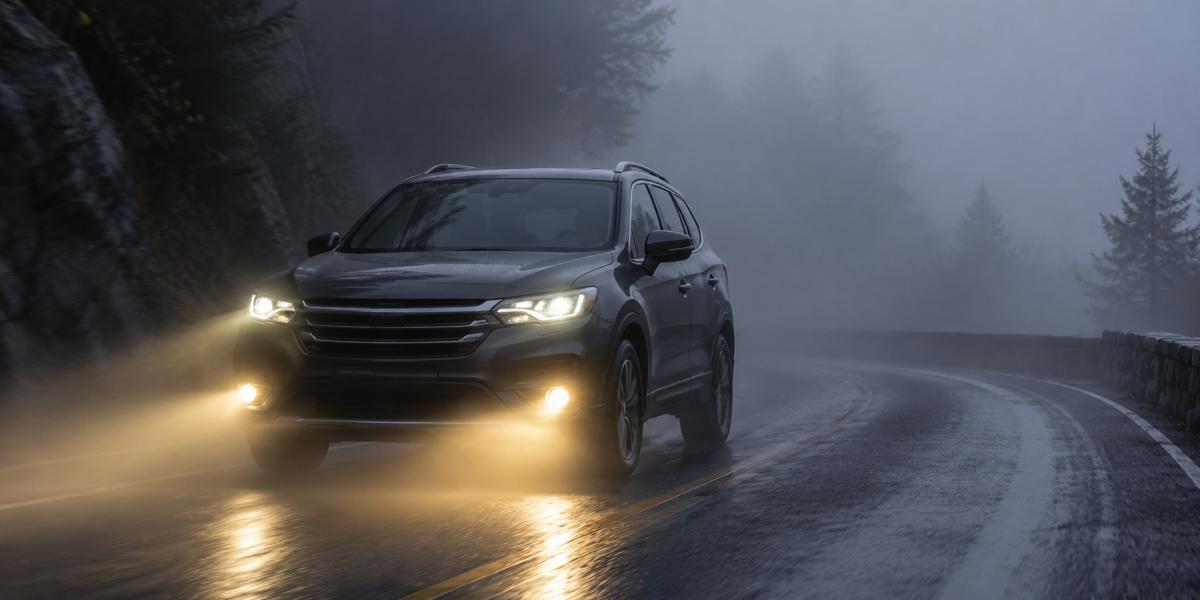
You're driving to work on a cool October morning when the road ahead begins to disappear.
At first, it's just a little mist hanging over the fields. A mile later, you can barely make out the next intersection. The car ahead fades into a pair of dim red lights.
You reach for the headlight switch.
Low beams? High beams? Fog lights?
Most drivers have heard of fog lights. Some have used them for years. But ask exactly how they work—or what that strange dashboard symbol means—and the answers get less certain.
Are fog lights simply brighter headlights? Why are they usually mounted so low? Does yellow light really cut through fog better than white? And why do some vehicles have a rear fog light when others don't?
The answers are more interesting than you might expect.
Fog lights are specially designed vehicle lamps that help drivers see nearby road surfaces and make their vehicles more visible in poor weather. Their advantage comes primarily from how they direct light, not from being more powerful than ordinary headlights.
Understanding that difference matters because poor visibility leaves very little room for mistakes.
How Dangerous Is Driving in Fog? What U.S. Crash Data Shows
Fog doesn't have to be thick enough to hide the entire road to become dangerous.
Even moderate fog can reduce how far ahead a driver can identify stopped traffic, pedestrians, curves or objects on the roadway.
According to the Federal Highway Administration (FHWA), its published U.S. estimates show: 38,700+ Fog-related crashes per year, 600+ People killed annually, 16,300+ People injured annually.
FHWA's published historical annual estimates, not a count of crashes in 2026. (Source)
These figures illustrate why fog deserves more attention than it sometimes receives.
A driver traveling at highway speed may be covering ground faster than the visible stretch of road allows them to react.
And visibility can change suddenly, particularly near rivers, valleys, bridges and low-lying areas.
The National Weather Service specifically warns that patchy fog can surprise drivers and recommends slowing down, using low-beam headlights and increasing following distance. (Source)
Fog lights are one part of that preparation.
But to understand what they can actually do, we need to look at why fog makes ordinary headlights less effective.
What Are Fog Lights?

Fog lights, sometimes called fog lamps, are vehicle lights designed to improve visibility during fog, mist and certain other low-visibility conditions.
Unlike conventional headlights, which are responsible for illuminating the road ahead during normal nighttime driving, front fog lights generally produce a lower, wider beam intended to illuminate the road surface closer to the vehicle.
They're especially useful for identifying nearby lane markings, road edges and the immediate driving path.
Most front fog lights are positioned lower than the main headlights, commonly in or near the lower front bumper.
But not every vehicle has them.
Some modern cars use integrated lighting designs, while certain trim levels omit separate fog lights altogether.
There's also a second type that serves a different purpose: the rear fog light, designed to make the vehicle easier to see from behind in very poor visibility.
We'll look at both shortly.
How Do Fog Lights Work?
Here's the most common misunderstanding:
Fog lights don't magically penetrate fog. They manage where the light goes.
Fog consists of tiny water droplets suspended near the ground. When headlight beams strike those droplets, some of the light scatters in different directions.
Part of that scattered light travels back toward the driver.
This is called backscatter.
It's the reason turning on high beams in thick fog can make the road ahead appear even whiter and harder to see.
Why Low-Mounted, Wide Beams Help
A well-designed front fog lamp reduces unnecessary upward light and concentrates more illumination across the nearby road surface.
Its characteristic design uses three features:
1. Lower mounting position. Front fog lamps are generally installed below the main headlights, changing the angle at which the light enters the fog and returns toward the driver's eyes.
2. Wide horizontal beam. Fog lamps spread light across a relatively broad area close to the vehicle, helping illuminate the roadway and its edges.
3. Controlled vertical cutoff. The beam limits upward illumination, reducing the amount of light directed into droplets that could create glare.
A technical paper published by SAE International, Front Fog Lamp Performance, examines how mounting height, beam pattern and lamp aiming affect fog glare and the visibility of road objects. (Source)
That design explains why a relatively modest fog light can be more useful in certain foggy conditions than a powerful high beam.
It's not trying to illuminate half a mile of road.
It's trying to put useful light where the driver needs it, without creating unnecessary glare.
Why High Beams Make Fog Worse

High beams project more light farther ahead, including upward into the fog.
More of that light can scatter back toward the driver's eyes, creating a bright veil that reduces contrast.
Instead of seeing farther, the driver may see less.
The National Weather Service explicitly advises drivers not to use high-beam headlights in fog because of the glare they produce.
Its recommendation is to use low-beam headlights, supplemented by fog lights if the vehicle has them. (Source)
The lesson is simple: more light isn't always better light.
What Are Fog Lights Made Of?
A fog lamp may look like a simple light attached to the front bumper, but several components work together to create its distinctive beam pattern.
The basic construction includes a light source, optical components, a protective housing and an electrical control system.
Light Source: Halogen or LED
Older fog lights commonly use halogen bulbs.
Many modern vehicles use LEDs, which allow manufacturers to design compact lighting assemblies with precise optical control.
LEDs are not automatically better at illuminating fog simply because they're brighter. The light's direction, distribution and glare control are more important than raw brightness alone.
Reflector, Lens and Optical System
The reflector or projector optics direct light into the intended beam pattern.
The outer lens protects the internal components and may also contribute to light distribution.
Together, these parts help produce the relatively wide, low beam associated with front fog lights.
Housing and Electrical Controls
The housing protects the lamp from moisture, dirt, vibration and road debris.
Wiring, switches, connectors and electronic control components allow the lights to operate with the vehicle's lighting system.
Some vehicles also automatically disable their front fog lamps when high beams are activated.
For example, Ford's 2025 Bronco Sport owner's manual documents this behavior. (Source)
Are Yellow Fog Lights Better Than White Fog Lights?
There's a reason yellow fog lights have remained popular for decades.
Warmer-colored light is often perceived as less harsh, and some research has found visibility advantages for lower-color-temperature lighting under particular fog conditions.
A 2023 study published in Applied Ergonomics investigated how lighting color temperature affected visibility in fog and found that warmer light improved visibility distance under certain dense-fog conditions, while the results differed when visibility was better. (Source)
Where Are Fog Lights Located on a Car?
There are two different locations to know about: the front and the rear.
Front Fog Lights
Front fog lights are generally mounted below the main headlights, often near the lower corners of the front bumper.
Depending on the vehicle, they may be round, rectangular or integrated into a larger lighting assembly.
Their primary job is to improve visibility of the road immediately ahead and to the sides during poor weather.
If you're looking at your vehicle and see only the main headlights, that doesn't necessarily mean anything is missing. Some models simply don't have separate fog lights.
Rear Fog Lights

Rear fog lights have a completely different purpose.
They don't help the driver see the road ahead.
Instead, they emit a bright red light intended to make the vehicle more noticeable to drivers approaching from behind in dense fog.
Some vehicles have one rear fog lamp; others have two. Many U.S.-market vehicles don't have a dedicated rear fog lamp at all.
Rear fog lights are also much brighter than ordinary taillights. When visibility improves, leaving them on can cause unnecessary glare or make brake lights harder for following drivers to distinguish.
Their use should be limited to conditions where they're genuinely needed, in accordance with local rules and the vehicle manual.
What Does the Fog Light Symbol Look Like?
You may have seen a green or amber light appear on the dashboard without knowing exactly what it represents.
The fog light symbol is usually shaped like a small lamp with several light-beam lines and a wavy line crossing them.
That wavy line represents fog.
The easiest way to distinguish front and rear fog lights is by looking at the direction of the beam lines.
|
Dashboard Symbol |
What It Looks Like |
|---|---|
|
Front Fog Light |
Lamp facing left, with downward-sloping light lines crossed by a wavy vertical line |
|
Rear Fog Light |
Lamp facing right, with horizontal light lines crossed by a wavy vertical line |
|
High Beam |
Lamp facing left with straight horizontal light lines and no fog-wave symbol |
|
Low Beam |
Lamp facing left with downward-sloping light lines and no fog-wave symbol |

These are common symbol conventions; appearance and availability vary by vehicle.
Ford's dashboard warning and indicator guide illustrates the front fog-light symbol alongside other lighting indicators. (Source)
Fog Lights vs. Low Beams vs. High Beams: What's the Difference?
These three lighting systems aren't interchangeable.
|
Light Type |
Primary Purpose |
Recommended Use in Fog |
|---|---|---|
|
Low-Beam Headlights |
Illuminate the road while controlling glare for other drivers |
Yes. Use as your primary headlights. |
|
High-Beam Headlights |
Provide longer-range illumination when conditions allow |
No. They can produce excessive backscatter and glare. |
|
Front Fog Lights |
Provide low, wide illumination of nearby road surfaces |
Yes, when fitted and appropriate for the conditions. |
|
Rear Fog Lights |
Make the vehicle more visible to traffic approaching from behind |
Only in sufficiently poor visibility, according to local rules and vehicle instructions. |
One more detail is easy to overlook.
Daytime running lights are not necessarily a substitute for turning on your headlights.
On some vehicles, daytime running lights illuminate the front of the vehicle without turning on the rear taillights.
The National Weather Service specifically recommends low beams in fog partly because they help make the vehicle visible from both the front and rear. (Source)
When Should You Use Fog Lights?
Fog lights are intended for reduced-visibility conditions, not simply because the weather looks gloomy.
Appropriate situations may include dense fog, heavy mist and some other conditions where visibility is significantly reduced.
However, fog-light laws and equipment requirements vary by U.S. state, and rear fog lights may have different restrictions from front fog lights.
NHTSA explains that individual states have authority to regulate auxiliary fog lamps, including certain aspects of their use and permissible colors. (Source)
Don't use fog lights as a substitute for safe driving speed or rely on them to overcome extremely poor visibility.
And remember to switch them off when conditions improve, especially bright rear fog lamps that may interfere with the visibility of your brake lights.
How to Drive Safely in Fog
Knowing how to switch on the correct lights is useful.
Knowing when to slow down is far more important.
The National Weather Service recommends reducing speed, maintaining plenty of space between vehicles, avoiding high beams and using road markings to help identify your lane.
If visibility becomes so poor that you can't drive safely, find a suitable location completely away from moving traffic and wait for conditions to improve. (Source)
A particularly important principle is:
Drive slowly enough that you can stop within the distance you can clearly see.
If you can only see a short distance ahead, traveling at normal highway speed leaves very little opportunity to respond to a stopped vehicle or unexpected obstacle.
And that's where fog, braking and tire condition begin to connect.
Why Following Distance Matters More Than Ever in Fog
Imagine you're driving along a familiar stretch of highway.
On a clear day, you can see the traffic far ahead. If cars begin slowing, you may notice brake lights well before you need to react.
In heavy fog, that early warning disappears.
By the time another vehicle becomes visible, you may have much less distance available.
Stopping a vehicle involves two separate stages:
Reaction distance: The distance traveled while the driver notices the danger, decides what to do and begins braking.
Braking distance: The distance the vehicle travels after the brakes are applied until it comes to a stop.
Together, they make up total stopping distance.
Fog mainly reduces the distance over which drivers can detect hazards. It doesn't change the basic laws of braking.
And neither powerful headlights nor advanced braking systems can eliminate the distance traveled before a driver reacts.
That's why slowing down and leaving extra following distance is so important.
We examined this relationship in our previous article, Reaction Time and Braking Distance: Why Tire Pressure Matters.

There's another factor worth paying attention to before a foggy commute: the condition of the tires themselves.
Can Tire Pressure Affect Braking Distance?
Yes, although the relationship is more complicated than saying every decrease in tire pressure adds a fixed number of feet to your stopping distance.
Tires provide the contact between your vehicle and the road.
When you brake, the braking system slows the wheels, but the tire-road interface must transmit that braking force.
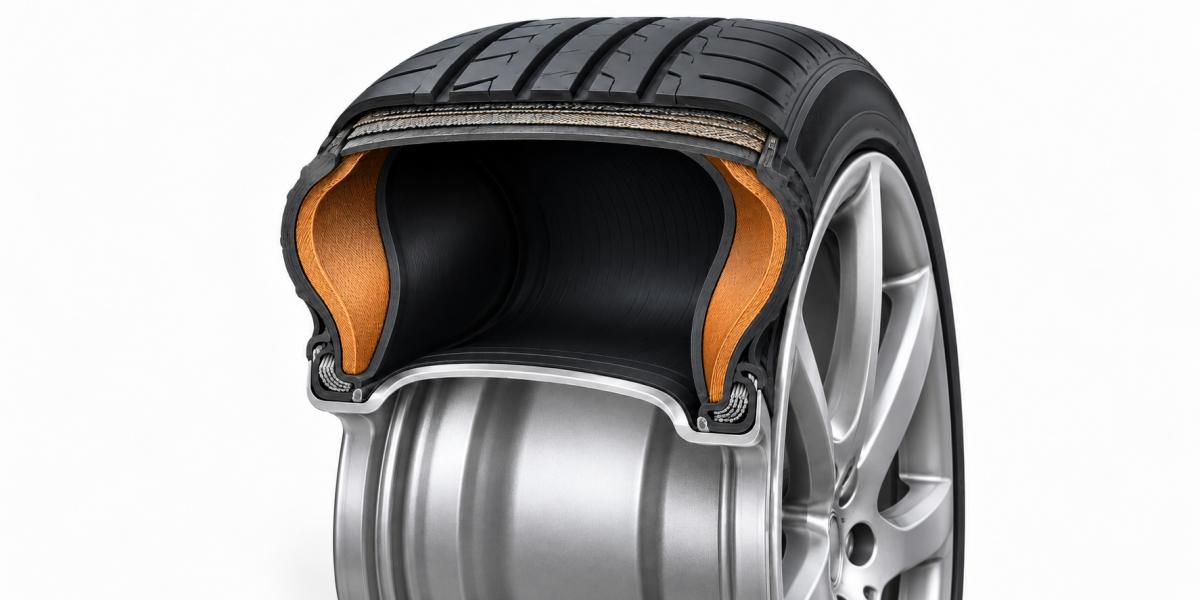
Incorrect inflation can change the tire's shape, contact-pressure distribution, handling characteristics and behavior on wet pavement.
A NHTSA technical assessment of tire-pressure monitoring systems examined research on how inflation pressure affects vehicle stopping distances. (Source)
The results were not identical across different test conditions.
Some wet-road tests found considerably longer stopping distances with underinflated tires. Other tests produced smaller effects or different results depending on road surface and water depth.
That distinction matters.
Incorrect tire pressure can affect braking performance, but the exact effect depends on the tire, road surface, water depth, vehicle and other conditions.
In fog, roads may also be wet, particularly during cool mornings when moisture is present.
You shouldn't assume that a road is slippery simply because there's fog. But neither should you overlook the possibility of moisture or unexpectedly reduced traction.
The correct preventive habit is to maintain the manufacturer's recommended tire pressure rather than trying to manipulate PSI to shorten braking distance.
According to NHTSA TireWise, drivers should check tire pressure at least once a month when the tires are cold, using the vehicle's doorjamb label or owner's manual to determine the correct PSI. (Source)
Proper inflation won't make fog disappear, but it helps ensure your tires are operating under their intended conditions.
A Simple Tire-Pressure Check Before Your Next Foggy Drive
Fog often appears during cool mornings, particularly in valleys and near bodies of water.
Seasonal temperature changes can also influence tire-pressure readings.
This makes routine tire inspection a sensible addition to your regular vehicle maintenance.
Before a long drive, or as part of your monthly checks, measure the cold pressure in all four tires and compare it with your vehicle's specifications.
Look for uneven wear, cuts, bulges and unusual pressure differences.
If a tire is genuinely underinflated, correct its pressure before driving.
For people who drive pickups, large SUVs, trucks or RVs, regularly adjusting tire pressure can be less convenient when a small compressor takes a long time to fill larger tires.
That's where having a capable inflator nearby makes a difference.
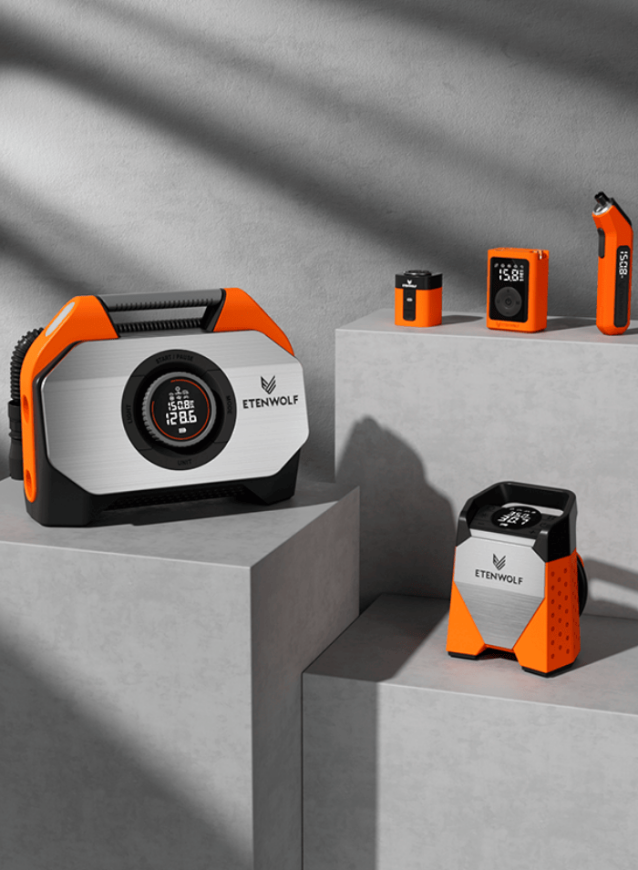
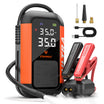
Make Tire Pressure Maintenance Easier With the ETENWOLF Vortex S7

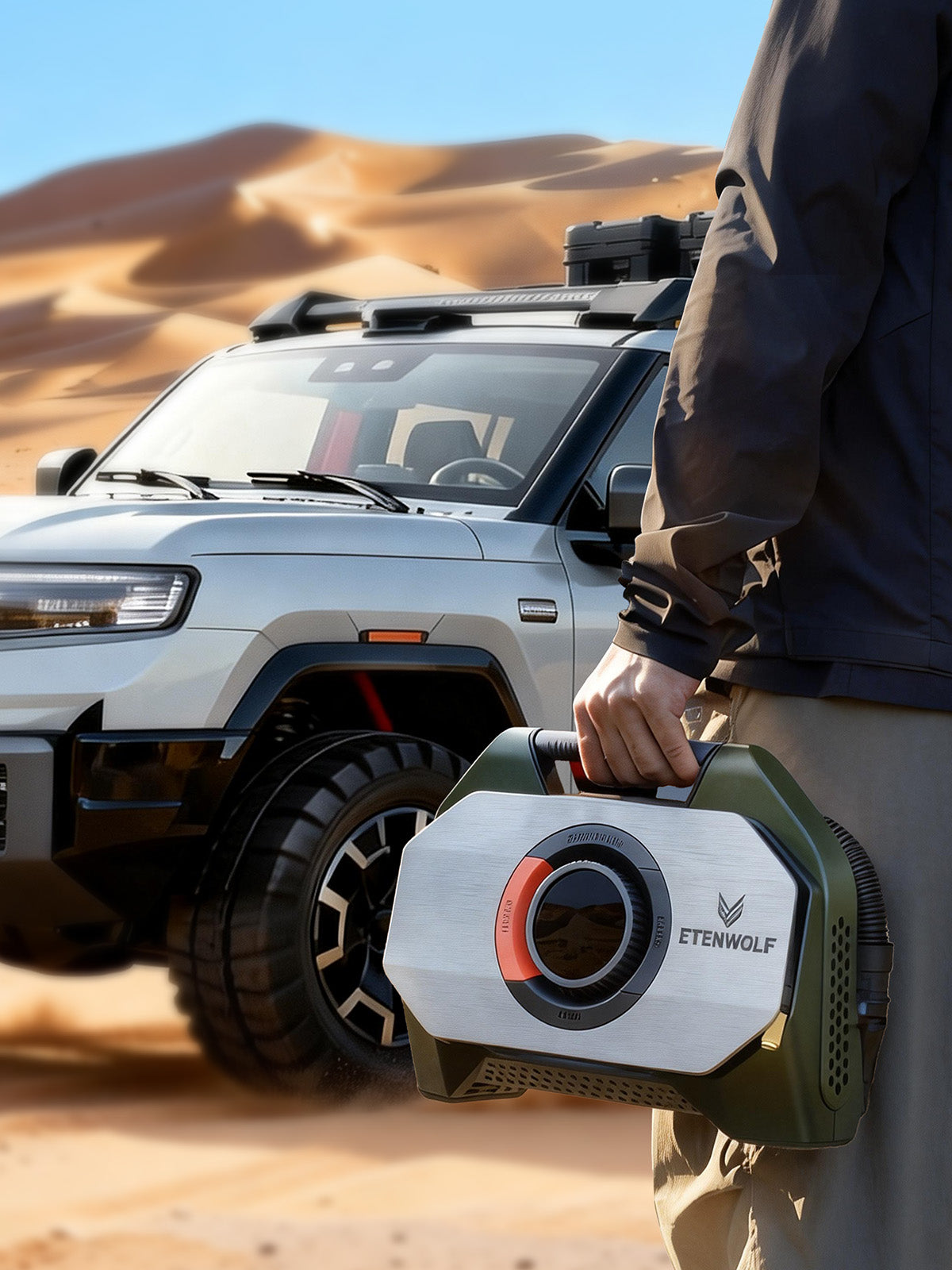
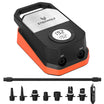
The ETENWOLF Vortex S7 Heavy Duty Tire Inflator is designed for drivers who need substantial airflow and battery capacity for larger tires.
Its dual 260W motors deliver 52 L/min (1.85 CFM at 0 PSI), supported by a 38,400mAh rechargeable battery.
With a digital pressure display, ±1 PSI rated accuracy, automatic shutoff and built-in cooling, the S7 makes routine inflation more convenient when a tire needs a pressure adjustment.
The value here isn't that the S7 magically improves braking performance.
It's that drivers can maintain their tires at the manufacturer's recommended pressure without relying on the nearest functioning gas-station compressor.
An inflator can't repair worn tires, eliminate slippery conditions or replace safe following distances.
And in dangerously dense fog, finding a safe place to stop is far more important than making a routine pressure adjustment on the roadside.
For truck and SUV owners who want to understand why airflow and cooling matter, our guide to why tire inflators struggle with large truck and trailer tires explains those differences.

Final Thoughts: Seeing the Road Is Only Part of Driving Safely
Fog lights are more than an extra pair of lamps in the front bumper.
Their low, wide, controlled light pattern is designed to make nearby road surfaces easier to identify while reducing unnecessary glare.
But they have limits.
They can't make dense fog transparent, and they can't give you back the reaction time lost by driving too fast for the conditions.
The safest approach combines good visibility with sensible driving habits.
Use low-beam headlights. Turn on fog lights when appropriate. Increase the space between vehicles. Reduce speed before visibility becomes dangerously limited.
And take care of the equipment that ultimately connects your vehicle to the road—your tires.
Because seeing a hazard is only the first part of avoiding it.
You still need enough time, distance and traction to stop.
FAQs
What Are Fog Lights?
Fog lights are vehicle lamps designed to provide additional illumination in poor visibility. Front fog lights usually produce a low, wide beam to help drivers see the road nearby while reducing glare.
How Do Fog Lights Work?
Fog lights use carefully controlled beam patterns, usually with limited upward illumination, to reduce unwanted light scattering toward the driver's eyes. Their mounting position and optical design help illuminate nearby road surfaces more effectively under certain fog conditions.
Why Are Fog Lights Usually Mounted Low?
Low mounting changes the direction and geometry of light entering the fog. Combined with a wide beam and controlled cutoff, it can help reduce glare and illuminate the road closer to the vehicle. The result depends on lamp design and aiming, not mounting height alone.
What Does the Fog Light Symbol Mean?
The front fog-light symbol typically shows a lamp facing left, downward-sloping beam lines and a wavy line representing fog. It's commonly green.
The rear fog-light indicator commonly shows a lamp facing right with beam lines crossed by a wavy line. It's typically amber.
Where Is the Fog Light Switch Located?
Depending on the vehicle, the switch may be on the dashboard, integrated into the headlight knob, positioned on a steering-column stalk or found in a touchscreen lighting menu. Your vehicle owner's manual identifies the exact location and operating instructions.
Should I Use High Beams or Fog Lights in Fog?
Use low-beam headlights and fog lights if your vehicle has them and conditions warrant their use. Avoid high beams because they can create excessive glare as light scatters back from fog droplets.
Can I Drive With Fog Lights on All the Time?
Fog lights are intended for reduced visibility. Their use is governed by vehicle design and applicable state or local rules. Rear fog lights in particular can create glare for following drivers when conditions are clear.
Do All Cars Have Fog Lights?
No. Some vehicles have separate front fog lamps, others use integrated lighting designs, and some have no dedicated fog-light equipment. Rear fog lamps are also not fitted to every U.S.-market vehicle.
Does Tire Pressure Affect Braking Distance in Fog?
Tire pressure can influence vehicle handling and braking performance, but the exact stopping-distance effect varies with road conditions, water depth, tire design and other factors. Fog primarily reduces how far ahead drivers can detect hazards, making lower speeds and increased following distance especially important.

Leave a comment
All comments are moderated before being published.
This site is protected by hCaptcha and the hCaptcha Privacy Policy and Terms of Service apply.