
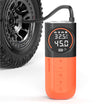



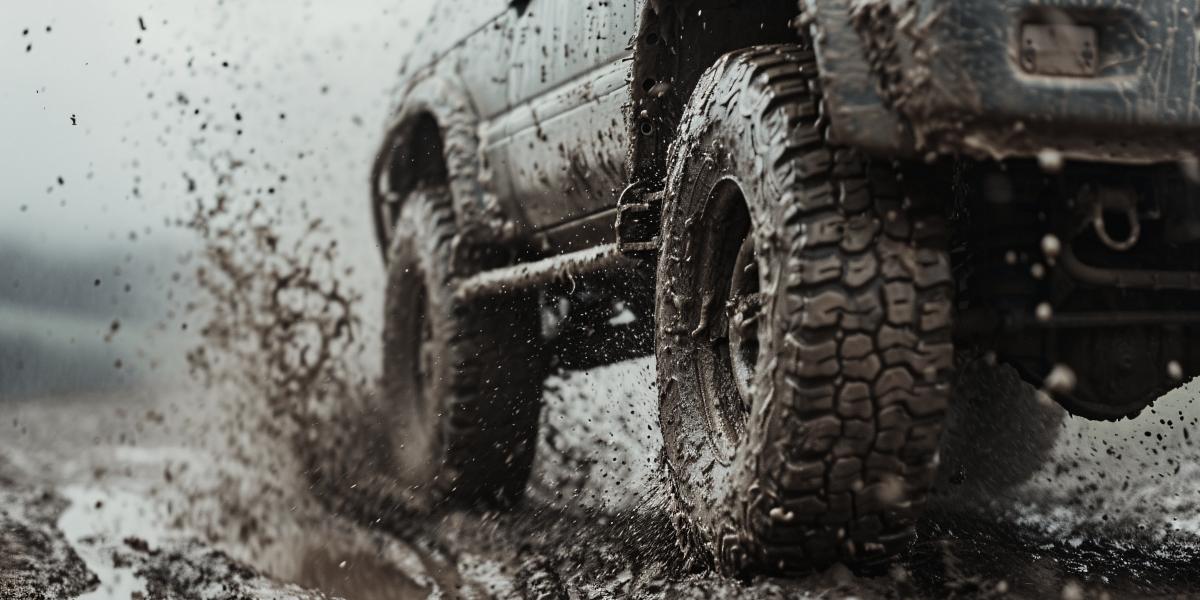
For many off-road drivers, lowering tire pressure before hitting the trail is part of the adventure. A lower PSI can help tires gain more contact with uneven surfaces, improve traction, and provide a smoother ride over rocks, sand, and mud. (Source)
But the real challenge often appears after the fun is over.
You are ready to leave the trail, the sun is going down, and you connect your tire inflator to bring your tires back to road pressure. The compressor starts running, but the pressure barely increases. Minutes pass, the motor becomes hot, or the inflator suddenly shuts down.
At that moment, many drivers start asking:
Why is my tire inflator so slow? Is something wrong with the valve? Is my compressor failing? Or is my equipment simply not powerful enough for my tires?
The answer is not always a broken tire inflator. In many cases, slow inflation is caused by a combination of tire size, airflow limitations, heat management, connection problems, or unsuitable equipment.
Understanding the common causes can help off-road drivers avoid frustrating situations and choose the right tools for their vehicles.
Why Off-Road Drivers Need to Adjust Tire Pressure
Unlike everyday highway driving, off-road conditions require different tire pressure strategies.
Many experienced off-road drivers lower tire pressure before entering trails because reducing PSI allows the tire to flex more and create a larger contact patch with the ground. This can improve traction on loose surfaces such as sand, gravel, and rocky terrain.
According to the Tire Industry Association, proper tire inflation plays an important role in tire performance, safety, and durability. (Source)
However, airing down is only half of the process.
Once the trail ends, tires need to be inflated again before returning to normal road speeds. Driving long distances on underinflated tires can affect handling, fuel efficiency, and tire wear. (Source)
This is where many drivers discover a problem:
A tire can release air quickly, but putting that air back in requires the right equipment.
Why Is My Tire Inflator Slow? Common Causes Explained
1. Your Tire Inflator May Not Be Powerful Enough for Your Tires

One of the most common reasons for slow inflation is using a compressor that is not designed for larger tires.
Many portable tire inflators are created primarily for passenger vehicles. A typical sedan tire may require around 32–35 PSI, and the air volume needed is relatively small.
However, off-road vehicles often use much larger tires:
· Jeep tires
· pickup truck tires
· SUV tires
· 35-inch or larger off-road tires
A larger tire contains significantly more air volume. Filling it requires more airflow, not just higher pressure.
This is where many consumers misunderstand tire inflators.
A product advertising 150 PSI maximum pressure does not automatically mean it is powerful enough for heavy-duty tires.
PSI tells you the maximum pressure the compressor can theoretically reach.
It does not tell you:
· How quickly it moves air
· How long it can run continuously
· How well it manages heat
· How much battery power it has available
For tire inflation speed, airflow is often the more important factor.
A compressor with higher airflow can refill a large tire much faster than a smaller compressor, even if both products advertise the same maximum PSI.
2. Overheating Protection May Be Limiting Performance
Another common reason for slow inflation is overheating.
Portable air compressors use electric motors to compress air. During operation, especially when filling large tires, the motor generates heat.
Many compact inflators include automatic thermal protection. When internal temperatures become too high, the compressor may:
· slow down
· stop temporarily
· require cooling time before continuing
This feature is designed to protect the motor, but it can become frustrating during off-road recovery situations.
Imagine finishing a remote trail with four large tires aired down. A small compressor may need several breaks just to prevent overheating.
For everyday emergencies, that may be acceptable.
For off-road use, where multiple large tires need adjustment, continuous performance becomes much more important.
3. A Dirty or Damaged Valve Stem Can Slow Inflation

When drivers experience slow inflation, they often immediately blame the compressor.
However, the tire valve itself can also be the problem.
This is especially common after off-road driving.
Trails expose vehicles to:
· dust
· sand
· mud
· small rocks
· moisture
These contaminants can enter the valve area and affect airflow.
Possible valve-related problems include:
Dirty valve core
A clogged or dirty valve core may restrict airflow, making inflation slower than normal.
Damaged valve core
A damaged valve core can cause:
· slow inflation
· pressure loss after inflation
· difficulty maintaining tire pressure
A simple inspection can help identify the issue.
Check whether:
· the valve stem is visibly dirty
· air escapes around the valve
· another tire inflates normally using the same compressor
If only one tire has a problem, the valve or tire is more likely the cause.
4. Poor Connection Between the Hose and Valve
Sometimes the problem is not the compressor or the tire.
It is the connection.
A loose or poorly sealed connection can allow air to escape while the compressor is running.
Common signs include:
· hissing sounds
· pressure increasing very slowly
· compressor running normally but tire pressure barely changing
Before assuming equipment failure, check:
· Is the connector fully attached?
· Is the valve connection secure?
· Is the hose damaged?
· Is the seal worn?
A good connection can make a noticeable difference in inflation efficiency.
Tire Inflator Troubleshooting: How to Find the Real Problem
When your tire inflator is slow, follow a simple troubleshooting process.
Step 1: Test Another Tire
Try inflating another tire.
If every tire inflates slowly:
The compressor may not have enough power, airflow, or battery capacity.
If only one tire has the problem:
The issue is likely related to:
· valve stem
· tire damage
· connection problem
Step 2: Listen to the Compressor
Pay attention to the motor.
A healthy compressor usually produces a consistent operating sound.
Warning signs include:
· frequent stopping
· unusual noises
· burning smell
· overheating
These may indicate the compressor is being pushed beyond its designed capability.
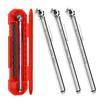
Step 3: Check Your Tire Pressure Gauge
Sometimes the compressor works correctly, but the pressure reading is inaccurate.
Using a reliable tire pressure gauge can help confirm whether the tire is actually gaining pressure.
How to Prevent Slow Inflation Problems During Off-Road Adventures

A little preparation can prevent many problems.
Choose a Compressor Designed for Your Vehicle
The right tire inflator depends on your vehicle.
A small compressor may be perfect for:
· compact cars
· motorcycles
· bicycles
But off-road vehicles require equipment designed for:
· larger tire volume
· repeated inflation cycles
· higher airflow demands
Keep Valve Stems Clean
After driving through mud, sand, or dusty trails:
· inspect valve stems
· remove visible dirt
· check for leaks
Small maintenance habits can prevent larger problems later.
Carry More Than Just a Compressor

Off-road tire management is not only about adding air.
Experienced drivers often carry:
· tire pressure gauge
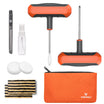
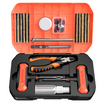
· tire repair kit
· emergency lighting
· recovery equipment
A compressor helps restore pressure, but preparation helps handle unexpected situations.
Why ETENWOLF Vortex S7 Is Designed for Off-Road Tire Inflation

For drivers who regularly explore trails, a standard portable inflator may not provide enough performance.
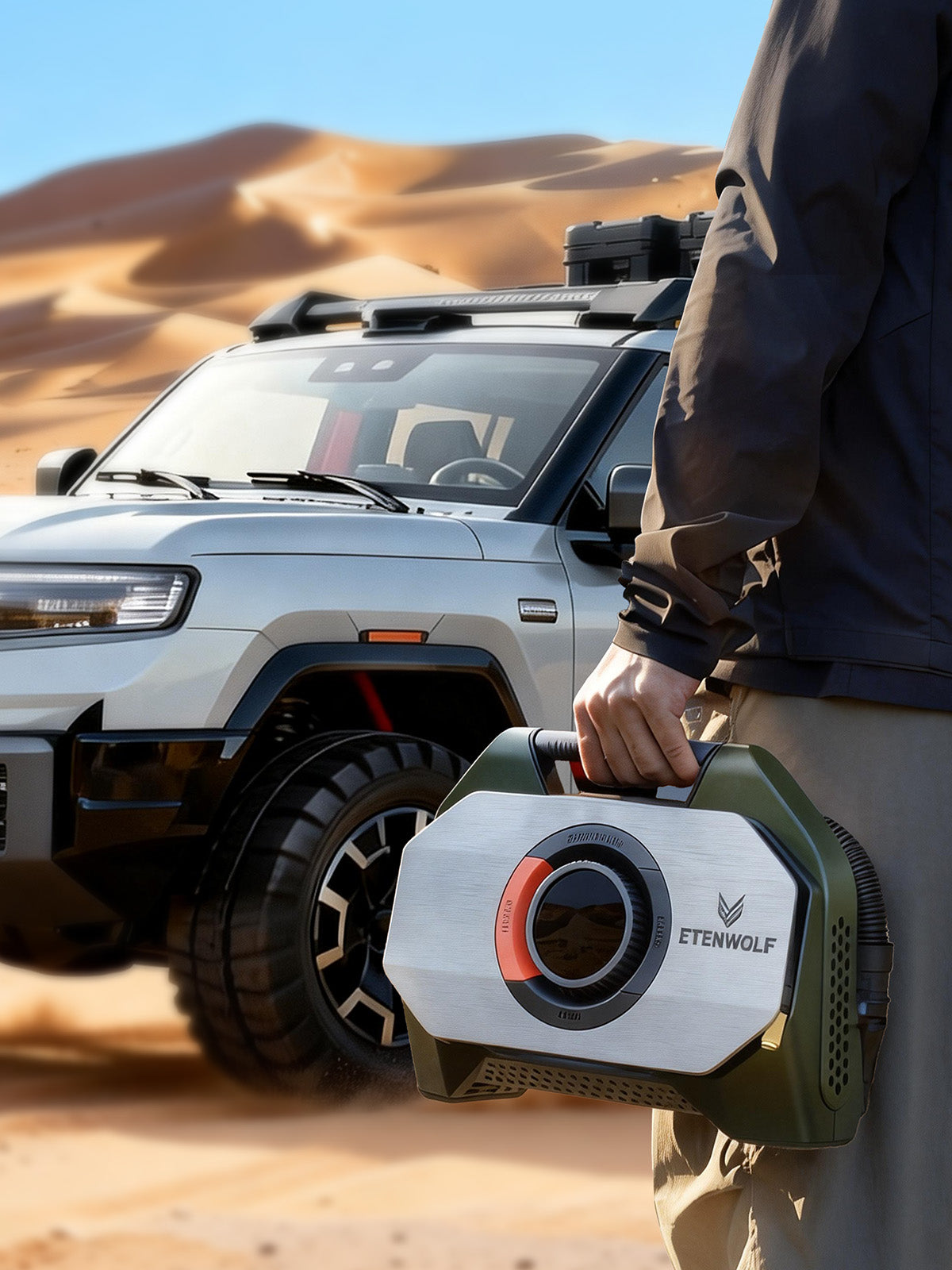
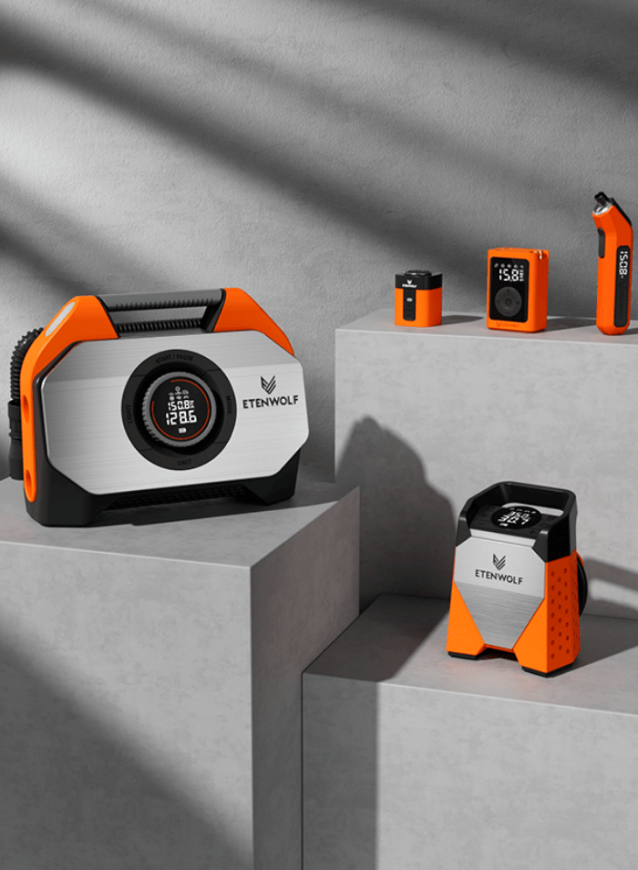
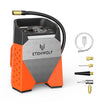
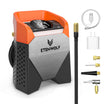
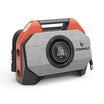
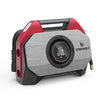
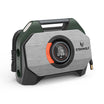
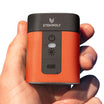
The ETENWOLF Vortex S7 Heavy Duty Tire Inflator was designed specifically for larger vehicles and demanding inflation situations, including pickups, SUVs, trucks, and off-road vehicles.
The difference comes down to several key factors.
High Airflow for Large Tires
The S7 uses a powerful dual-motor system delivering:
· 260W motor power
· up to 1.85 CFM airflow
· 52 L/min airflow rate
This higher airflow helps reduce inflation time when dealing with larger tires.
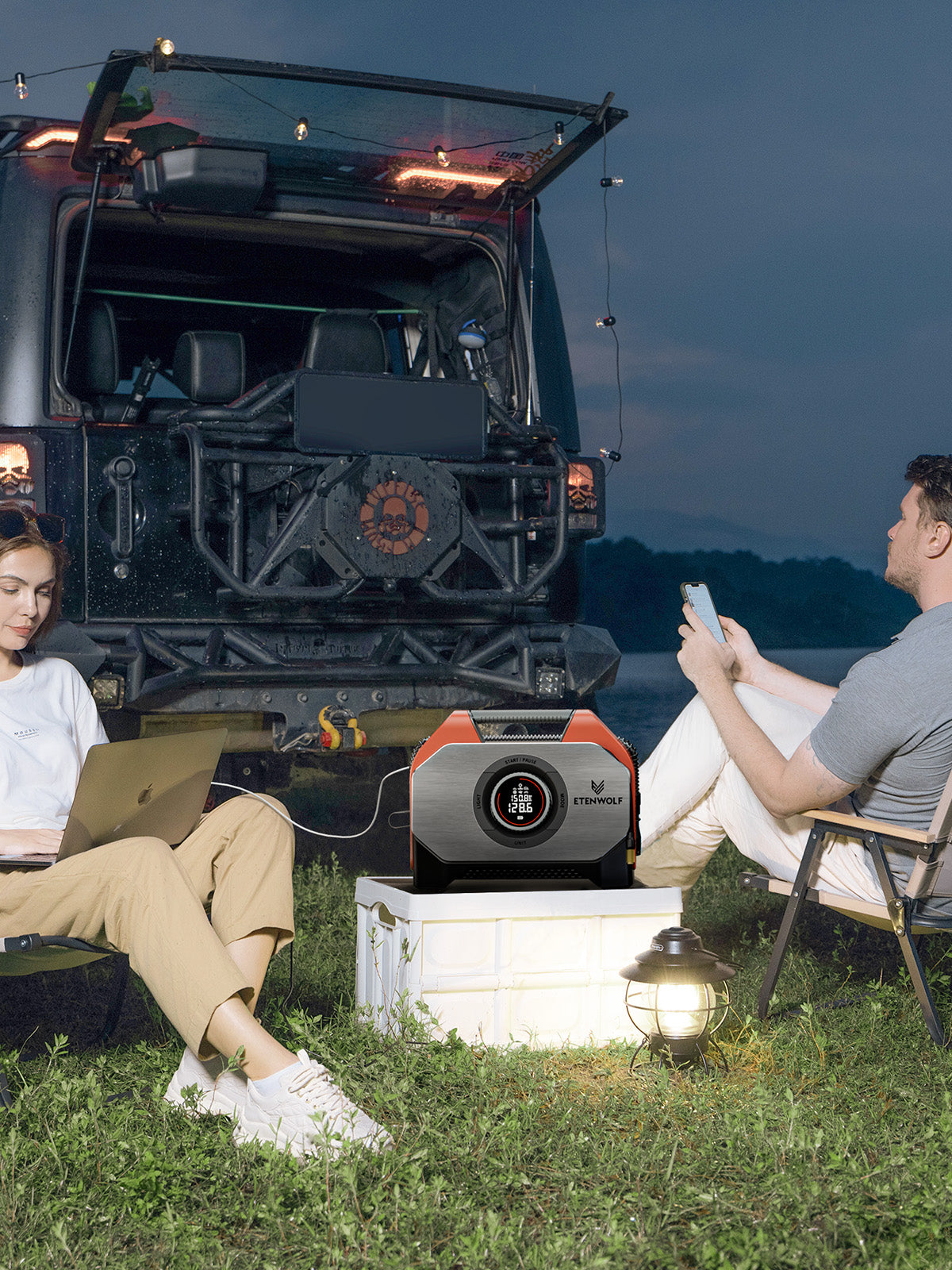
Large Battery Capacity for Remote Locations
Off-road adventures often happen far away from electrical outlets.
The S7 features a built-in:
· 38,400mAh lithium battery
This allows drivers to inflate multiple tires without depending on a vehicle power source.
It also includes USB-C fast charging and can function as a portable power source for other devices.
Built for Continuous Operation
One major frustration with smaller compressors is stopping repeatedly because of heat.
The S7 is designed with:
· dual-cylinder construction
· dedicated cooling system
· 100% duty cycle capability
This allows longer inflation sessions without frequent cooling breaks.
Designed for Practical Trail Use
The S7 also includes features that matter outdoors:
· automatic stop when reaching target pressure
· digital pressure display
· ±1 PSI accuracy
· built-in 1000-lumen LED emergency light
The included press-on valve design also makes connecting and disconnecting easier when adjusting tire pressure on the trail.

Final Thoughts: Slow Inflation Is Usually a Warning Sign
A slow tire inflator does not always mean the compressor is broken.
The problem could come from:
· insufficient airflow
· overheating protection
· dirty valve stems
· poor connections
· equipment that is too small for your tires
For casual drivers, a basic inflator may be enough.
But for off-road enthusiasts, tire pressure management is part of vehicle preparation and safety. A reliable compressor designed for larger tires can make the difference between a smooth trip home and a long wait on the trail.
The best tire inflator is not simply the one with the highest PSI number.
It is the one that can deliver the airflow, durability, and reliability your vehicle actually needs.
FAQs
Why is my tire inflator taking so long to inflate my tire?
Slow inflation is usually caused by insufficient airflow, large tire size, overheating protection, or a poor connection between the hose and valve.
Can a clogged valve stem make a tire inflate slowly?
Yes. Dirt, mud, or damage inside the valve core can restrict airflow and make inflation slower.
Why does my portable air compressor stop while inflating?
Many portable compressors automatically stop when they become too hot. This thermal protection prevents motor damage.
Does a higher PSI rating mean a better tire inflator?
Not necessarily. Maximum PSI does not determine inflation speed. Airflow rate, motor power, battery capacity, and cooling design are also important.
What tire inflator is best for off-road vehicles?
Off-road vehicles typically benefit from compressors with higher airflow, stronger motors, larger batteries, and better heat management.
How often should I check tire pressure before off-road driving?
Drivers should check tire pressure before every off-road trip and restore the correct pressure before returning to highway speeds.
Can I use a regular car tire inflator on Jeep or truck tires?
You can, but smaller inflators may take much longer and may overheat when filling larger off-road tires. A heavy-duty inflator is usually better suited for larger tire sizes.


Leave a comment
All comments are moderated before being published.
This site is protected by hCaptcha and the hCaptcha Privacy Policy and Terms of Service apply.