
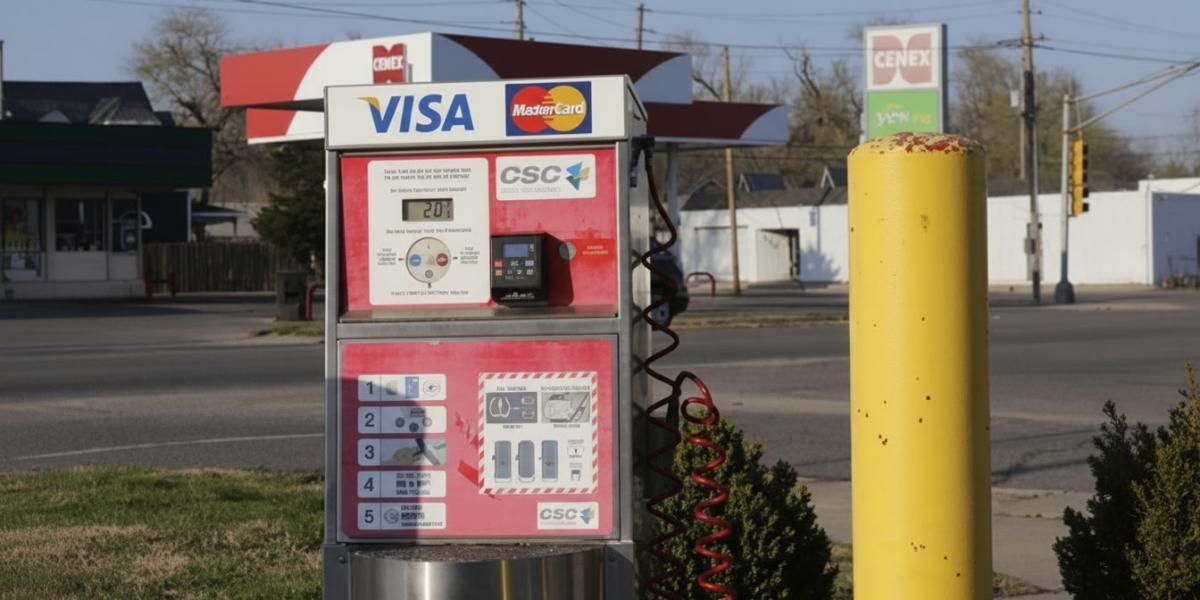
A flat tire is a tire's worst nightmare and is quite common to almost every driver. In fact, to most Americans, a gas station air pump is probably the most common prevention station for such an accident. It usually consists of a small compressor, usually located near the edge of the parking lot or beside the vacuum machines.
While these pumps are common across the United States, many drivers are unsure about the details.
Questions like these come up frequently:
· Do gas station air pumps cost money?
· How long do they run after you pay?
· Are there free air pumps anywhere?
· Should you inflate your tires immediately after driving?
It is important to understand how these machines work in order to properly fill your tires and to recognize when they make mistakes.
Why Proper Tire Inflation Matters
Before we go any further, let’s take a minute to talk about the importance of tire pressure, and how the pumps at gas stations actually work.
The U.S. Department of Transportation’s National Highway Traffic Safety Administration (NHTSA) has announced that underinflated tires are a leading cause of tire failure and can lead to poor fuel economy, reduced tire life, and most importantly, accidents. (Source)
Maintaining the correct tire pressure helps:
· Improve fuel economy
· Reduce tire wear
· Prevent blowouts
· Improve handling and braking performance
Safety experts estimate that about one quarter, or 25 percent, of passenger vehicles on U.S. roads may have at least one tire that is underinflated.
That’s why checking tire pressure regularly—and knowing how to inflate tires properly—is an essential part of vehicle maintenance.

What Is a Gas Station Air Pump?
A gas station air pump is a small air compressor designed to inflate vehicle tires using compressed air. Air pumps are usually located in the outside pumps area of a gas station and are available for use by the public.
Most pumps include:
· A pressure hose with nozzle
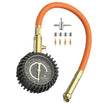
· A digital or analog pressure gauge
· A payment system (coins or card)
· A timer-based compressor
After payment, the compressor activates and provides air for a limited amount of time.

Do Gas Station Air Pumps Cost Money?
In many states, yes—air pumps often cost money.
Typical prices in the U.S. range from:
· $1.00 to $2.50 per use
Prices vary according to the location of the station and whether the additional function of vacuum services is included.
However, there are exceptions.
Free air laws in some states
In California, state law requires gas stations to provide customers with free water and compressed air when they purchase fuel. (Source)
You might happen to be in one of these states where—although a specific "rule of the road" regarding automobiles does indeed exist—most drivers are completely unaware of its existence: if you purchase fuel, you can ask the cashier to activate the air pump for you free of charge. Therefore, it is worth checking to see if your local laws address this matter.
Other states do not require free air, so charging a fee is common.
How Long Do Gas Station Air Pumps Run?
Most coin-operated machines work on a timer system.
Typical run times are:
· 3 to 5 minutes per payment
During that time, the compressor runs continuously while you inflate your tires.
If the timer runs out before you finish, you will have to pay again to put the pump back on.
This time limitation can be frustrating if:
· multiple tires need inflation
· the pump is slow
· there is a line of cars waiting
Step-by-Step: How to Use a Gas Station Air Pump
Using a gas station air compressor is an easy task but performing it properly yields the best results and provides the safest experience.
Step 1: Check the recommended tire pressure
Your vehicle’s recommended PSI is usually located on:
· the driver-side door frame sticker
· the owner’s manual
Do not inflate to the number printed on the tire sidewall. That number indicates maximum pressure, not the recommended pressure.
Step 2: Remove the valve cap
Unscrew the small plastic cap on the tire valve and place it somewhere safe.
The caps are often lost, so many drivers have kept a spare in their glove compartment.
Step 3: Activate the pump
Insert coins, swipe a card, or ask the cashier to activate if the machine is free with a fuel purchase.
The machine usually works at 32 psi. You will need to click "+" and "-" to get the pressure you want.
Once activated, the compressor begins running.
Step 4: Attach the air hose
Press the nozzle firmly onto the valve stem.
Some pumps require you to hold the nozzle in place while the pump inflates the solution, while others have a locking clip on the nozzle.
Step 5: Inflate and check the pressure
Watch the gauge while inflating.
Add air in short bursts and check the PSI regularly to avoid overinflation. (Although there is an automatic pause function.)
Step 6: Replace the valve cap
When the correct pressure is reached remove the nozzle and screw the valve cap back on.
Repeat for the other tires.
When Should You Check Tire Pressure?
Here’s where gas station pumps become less convenient.
Remember from your past reading that the NHTSA recommends that tire pressure be checked when tires are cold, meaning the car has not been driven for at least three hours. (Source)
Why?
Because driving heats the tires and so is the air in the tyre therefore the air is under higher pressure than it should be.
Experts note that tires will increase by around 4 PSI when driven on, which can make measurements inaccurate.
If you inflate tires immediately after driving to a gas station, they may be too hot to give the cold pressure reading.
This creates an awkward situation many drivers experience:
Because the light is on, you pull into the nearest gas station to fill up air. You are not told what makes the stop inconvenient. Apparently, the tires were still hot.
inflate tires immediately, you would have to technically wait 30 minutes or more, or sometimes even longer.
Most drivers understandably do not want to sit in a gas station parking lot that long.
Common Problems With Gas Station Air Pumps

Although they are convenient, gas station air pumps have several downsides.
1. Dirty or worn hoses
The high number of operators, combined with the fact that these are essentially high mileage, low cost pieces of equipment, results in many dirty and nasty high-viscosity oil-soaked high-Viscosity oil covered in road grime hoses.
Handling them can easily transfer grease or dirt onto your hands and clothing.
2. Limited accuracy
Some pumps use older gauges that may not be perfectly calibrated.
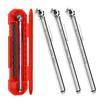
If accuracy matters, experts recommend carrying a separate tire pressure gauge.
3. Time pressure
Those time-efficient tire machines are a nice thought, but they don't always work in favor of the driver or attendant. It's not uncommon to have to rush to fill the remaining tires while the clock is running.
If the time expires mid-inflation, you may need to pay again.
4. Out-of-order machines
Many drivers have experienced the frustration of showing up to the gas station only to find that the air pump is broken or has been turned off.
When that happens, you may have to drive to another station.
5. Limited availability in remote areas
Rural areas Gas stations with air pumps are very common in cities and suburbs, but they may be difficult to find in:
· rural highways
· remote parks
· desert regions
· camping or off-road locations
If a tire problem occurs far from town, relying on a gas station pump simply isn’t practical.
A More Convenient Alternative: Portable Tire Inflators

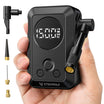
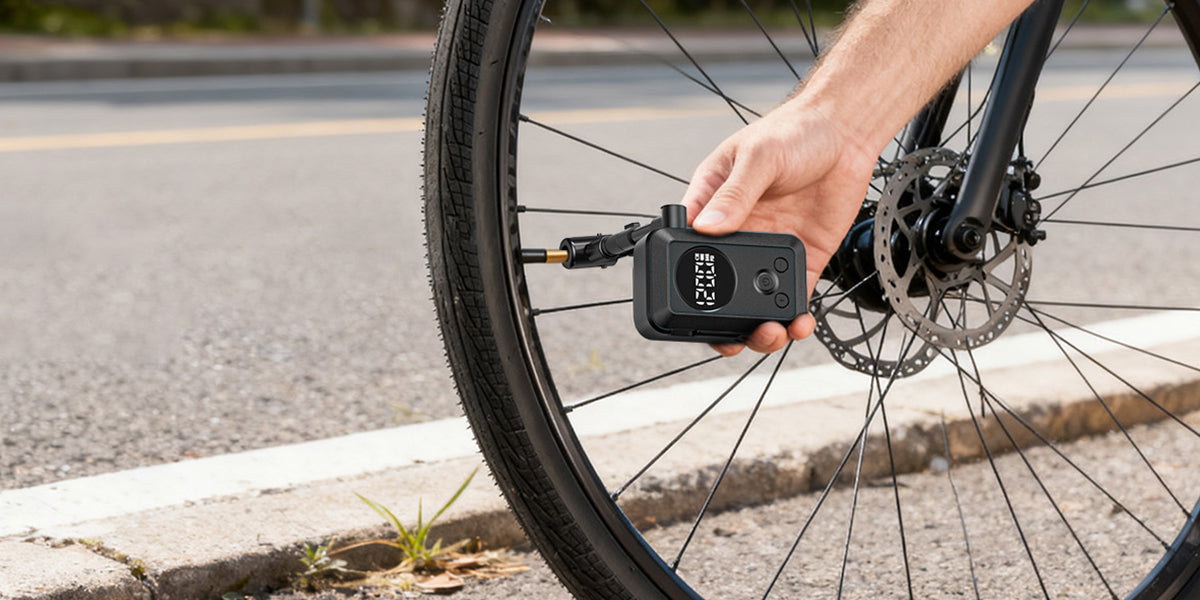
Also to that end, because of the limitations, many drivers today choose to carry a portable tire inflator in their cars.
A portable inflator allows you to:
· inflate tires anywhere
· avoid waiting in line at gas stations
· check pressure when tires are cold at home
· respond quickly to emergencies
For drivers who travel frequently or venture far from cities, having a reliable inflator in the trunk can be extremely helpful.
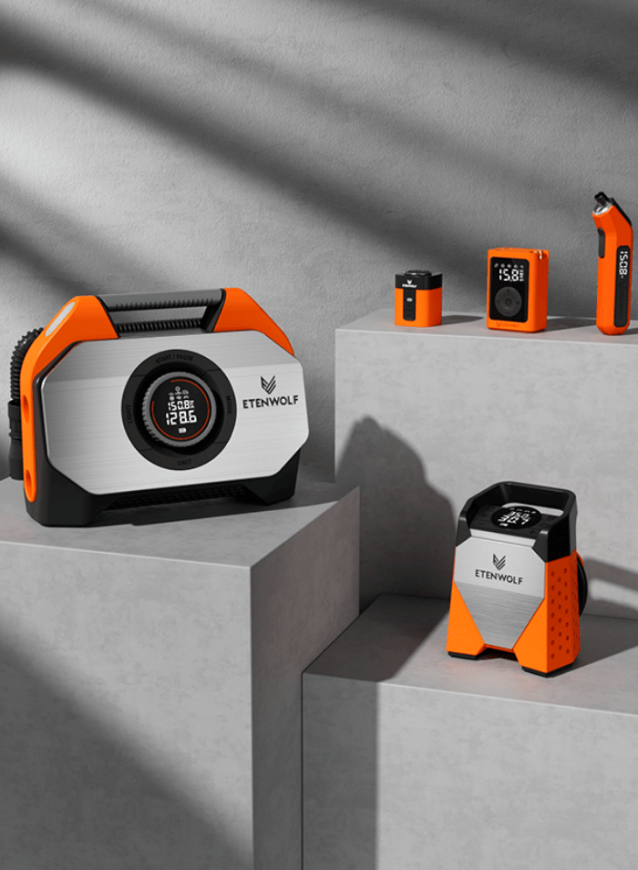
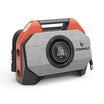
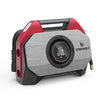
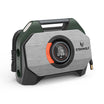
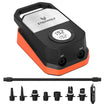
Example: ETENWOLF Vortex S7 Tire Inflator

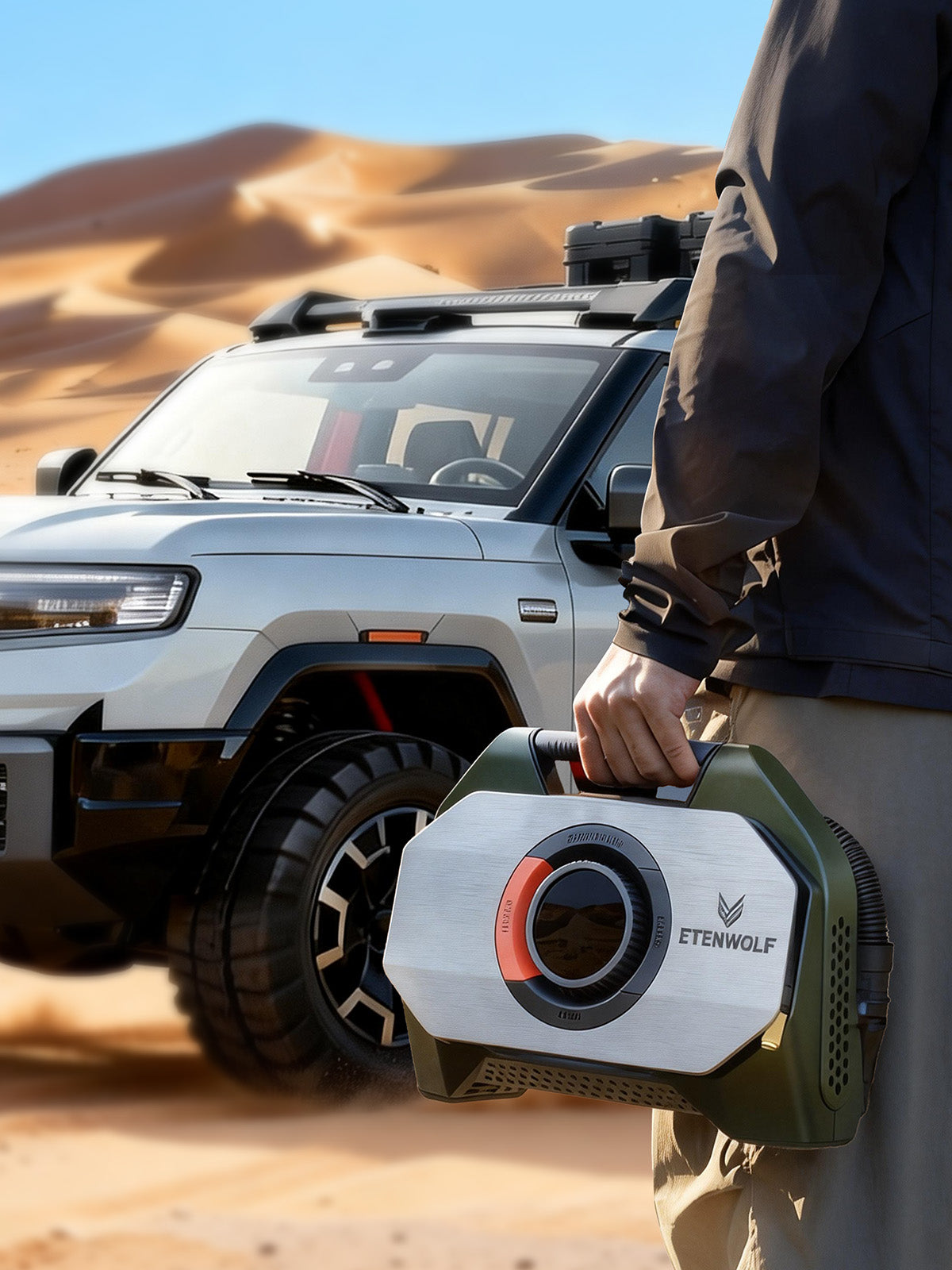
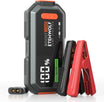
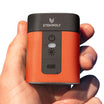
Portable tire inflators for harsh environments The ETENWOLF Vortex S7 tire inflator is a portable tire inflator.
Your average gas station air compressor requires you to hunt for change and stand by as they enforce an inconvenient time limit. Not so with a portable air pump.
The Vortex S7 is built for heavy-duty tires, making it suitable for:
· SUVs
· pickup trucks
· off-road vehicles
· RV support vehicles
Key features include:
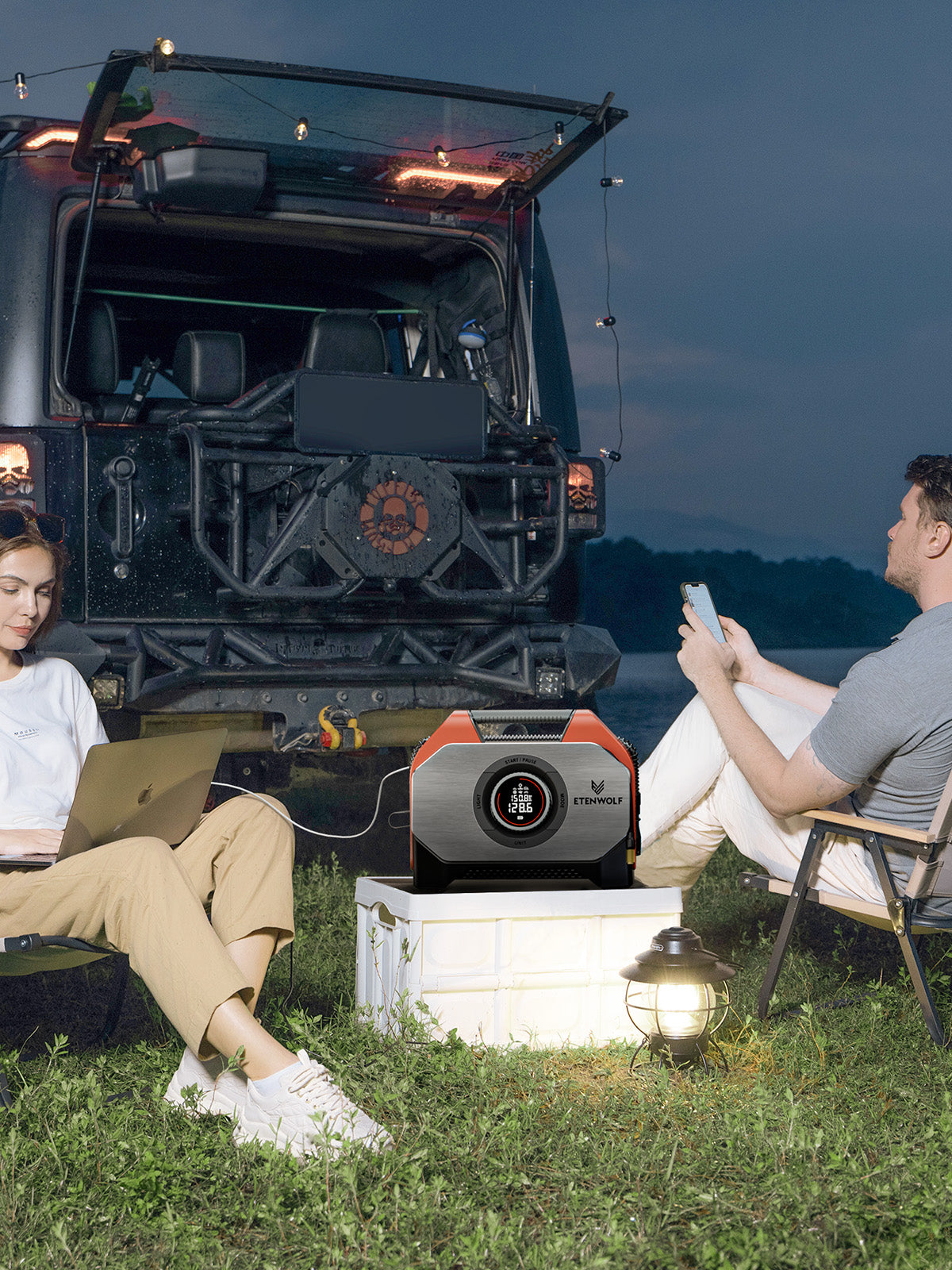
Large battery capacity
A 38,400 mAh battery is contained internally to the pump. No wall power needed.
Fast inflation speed
2CFM speed/260W motor. High airflow helps inflate larger tires quickly.
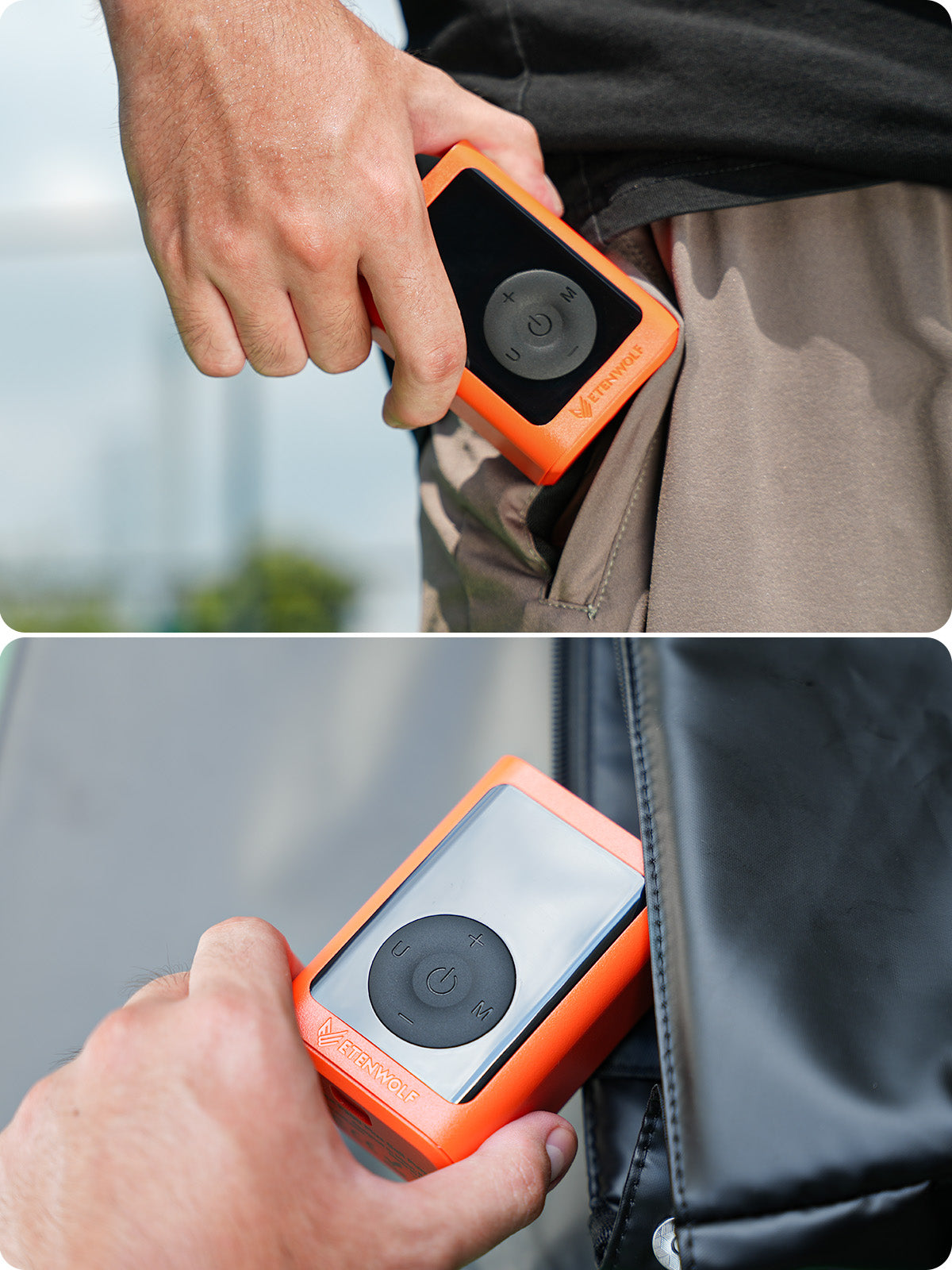
Wireless operation
No cords or hoses connected to a wall compressor.
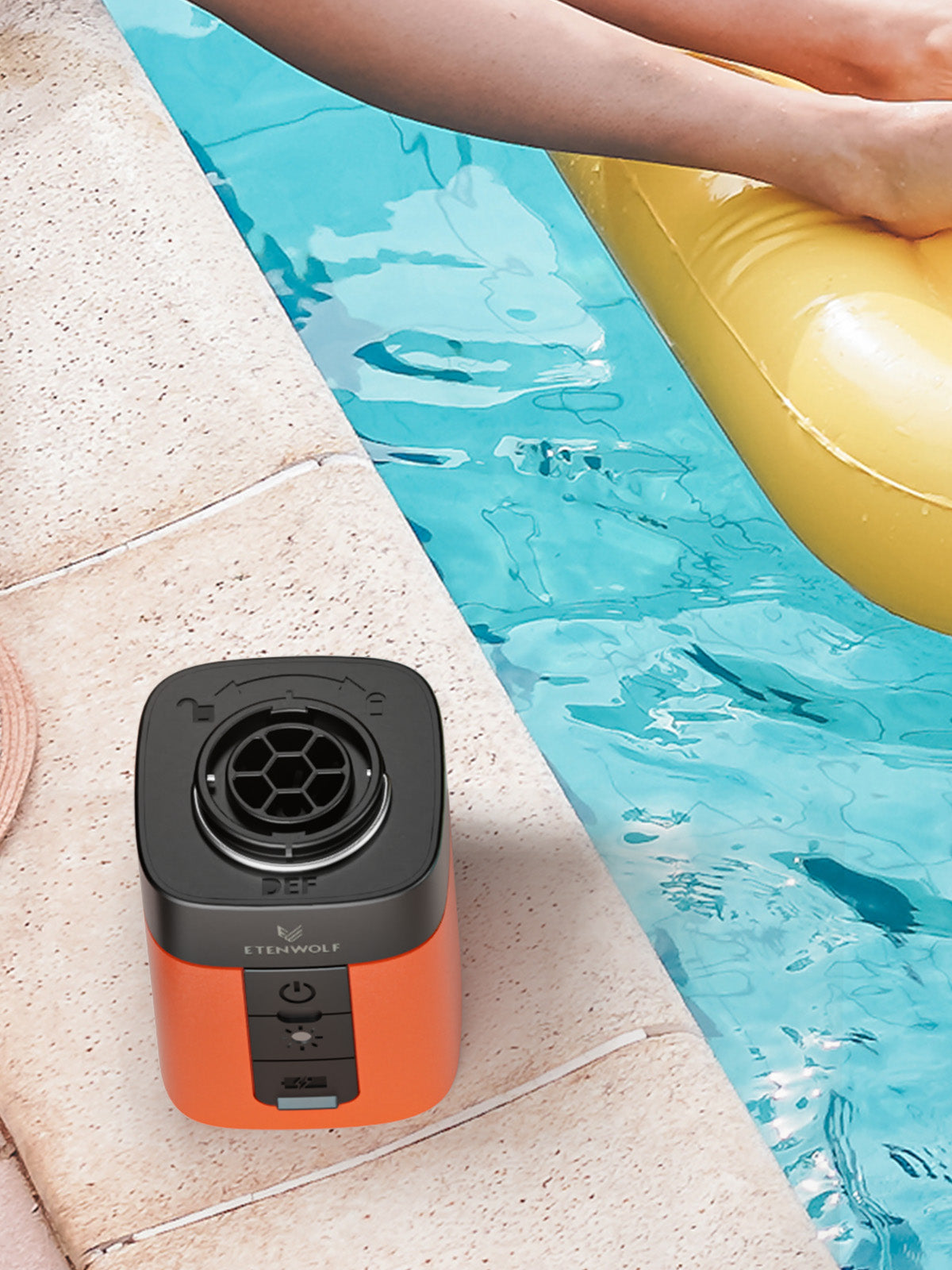
Portable design
Small enough to store in a trunk or gear bag.
A must for the frequent traveler, camper or long distance driver. This pump eliminates the need to depend a gas station air pump to inflate tires.

Final Thoughts
Air pumps at a gas station are useful and widely available option for filling up your tire. They are straightforward to operate and may be enough to handle minor adjustments to tire pressure.
However, they are not perfect.
Drivers often deal with:
· fees and time limits
· inaccurate readings from hot tires
· dirty hoses
· broken machines
· limited availability in remote areas
For these reasons, it is no surprise that many drivers today are choosing to carry a portable tire inflator in their vehicle as a redundant solution.
It lets you maintain tire pressure at home, while traveling or in the wilderness. No need to look for a gas station with a working air compressor.
FAQs
Q: Do gas stations charge for air pumps?
Some U.S. gas stations charge between $1 and $2.50 per puff, usually through coin operated machines. Some states require stations to provide free air to customers who purchase fuel.
Q: How long do gas station air pumps run?
Most pumps operate for 3–5 minutes after payment.
Q: Are there free gas station air pumps?
Yes. Some states such as California require free air with fuel purchases, and some tire shops offer free air services. (Source)
Q: When should you check tire pressure?
According to tire experts, the best time to check tire pressure is when tires are cold. “Cold” means the vehicle has not been driven in the last three hours. (Source)
Q: Can you inflate tires immediately after driving?
Yes, but the reading may be higher than the true pressure. The heat of the air in the tire expands the pressure. It is best to let the tires cool before adjusting the pressure.

Leave a comment
All comments are moderated before being published.
This site is protected by hCaptcha and the hCaptcha Privacy Policy and Terms of Service apply.